Why Do They Differ in Flexibility?
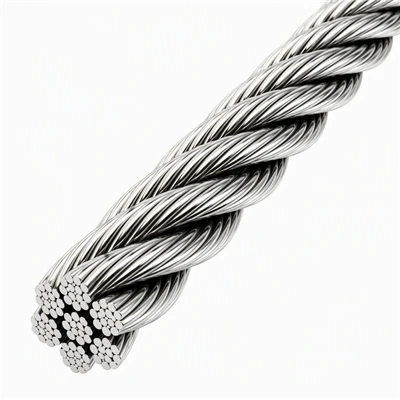
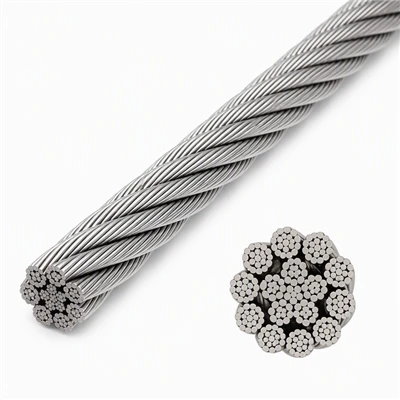
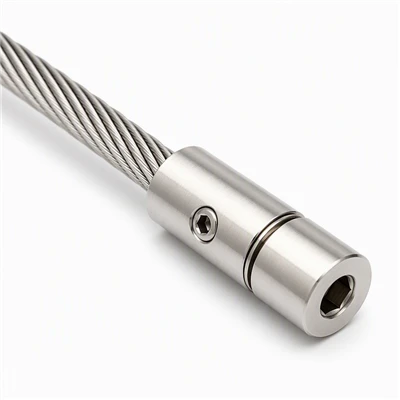
- 7x7 Gym Steel Cable: Consists of 7 strands, each containing 7 wires (total of 49 wires). Each strand is thicker, and the individual wires have a larger diameter.
- 7x19 Gym Steel Cable: Consists of 7 strands, each containing 19 wires (total of 133 wires). The wires within each strand are finer and more densely packed.
Core Physical Principle: When a steel cable bends, relative slippage occurs between strands and between wires. The finer the wires and the greater their number, the lower the internal frictional resistance during slippage, and the greater the resistance to bending fatigue. Therefore, the 7x19 configuration has a smaller bending radius, requires less force when passing over a pulley, and is less prone to developing permanent kinks.
Differences in Feel During Actual Use (Gym)
When passing over small-diameter pulleys
The guide pulleys on commercial fitness equipment (such as high-pulley rows and rowing machines) typically have a small diameter (approximately 50 mm–90 mm). A 7x19 steel cable fits smoothly around the pulley, providing a smooth, snag-free feel; In contrast, 7x7 steel cable experiences noticeable resistance on the same pulleys, which can lead to uneven wear on the pulley bearings over time.
Cable Twist and Recovery
When performing cable flyes or tricep extensions, if the cable twists under tension, the 7x19 cable recovers better, making it less likely for the grip end to knot or coil; the 7x7 cable, however, is stiffer and does not return to its original shape easily after twisting.
Industry Selection Guide
| Comparison Item | 7×7 (High‑Rigidity) | 7×19 (High‑Flexibility) |
|---|---|---|
| Tensile Strength (Breaking Load) | For the same wire diameter, its breaking force is about 5‑8% higher owing to a larger metal cross‑section area. | It delivers slightly lower breaking force yet fully meets load requirements for fitness‑equipment applications (with a typical safety factor ≥10). |
| Wear Resistance (Resistance to Compression) | It has a harder surface with superior compression resistance, suited for straight‑pull applications or large‑diameter drums. | Its surface distributes contact stress evenly but wears slightly faster than 7×7 wire when running against rough guide tracks. |
| Elongation Rate (Elastic Performance) | Low elasticity with minimal deformation under load. | It yields slight structural elongation (0.5%‑1%) under tension for improved shock‑absorbing performance during pulling. |
| Fatigue Life (Bending Cycles) | Poor bending‑fatigue performance; wire breakage readily occurs under repeated flexing. | It features drastically longer bending‑fatigue life, several times that of 7×7, which makes it ideal for high‑usage commercial gym environments. |
Industry Selection Recommendations
- Commercial gyms/high-volume personal training studios: 7x19 steel wire rope is the preferred choice. Its superior flexibility significantly extends the service life of both the pulley system and the cable itself, and it provides more linear force transmission during training, resulting in a better user experience.
- Simple Strength Stations/Linear Pull Equipment (e.g., deadlift racks, low-pull machines without pulleys): If the cable does not follow a curved path, a 7x7 wire rope offers better value for money and reduces travel errors caused by elastic elongation.
Important Warning: Be sure to check the inner diameter (R value) of your equipment's pulley groove. If the pulley groove diameter is less than 20 times the cable diameter (e.g., a 6mm cable paired with a pulley smaller than 120mm), the use of 7x7 cable is strictly prohibited; otherwise, wire breakage will occur within 1–2 months, posing a safety hazard. In such scenarios with small pulleys, 7x19 is the only safe option.