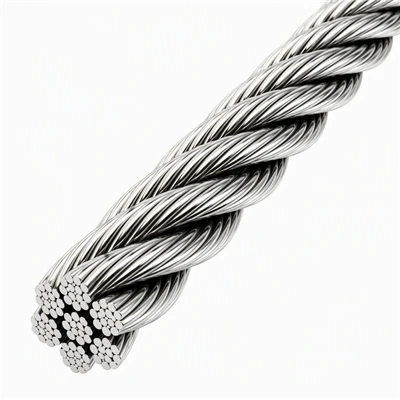
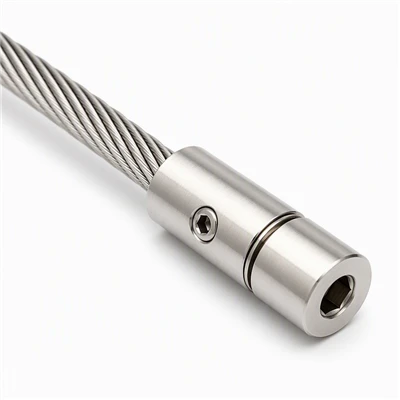
Non-rotating Steel Wire Ropes use opposite lay directions between inner and outer layers (e.g., outer strands right‑hand lay, inner strands left‑hand lay). Under load, the torque generated by each layer acts in opposite directions and largely cancels out, bringing the net rotation close to zero. This is the fundamental mechanism, but its effectiveness depends on the precision of the inner‑strand layout.
Three Arrangement Rules
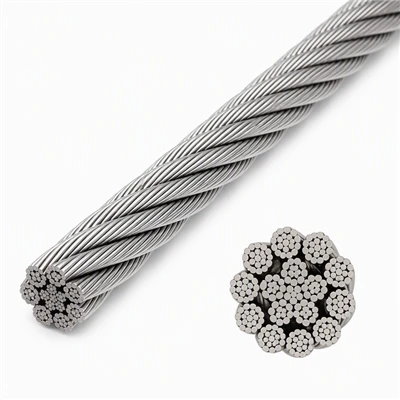
The inner strands (typically 6 or 8) are evenly spaced around a central core. Their arrangement follows three basic rules:
- Uniform symmetry – ensures balanced load distribution and avoids eccentric wear.
- Controlled clearances – small wedge‑shaped gaps between strands allow room for compressive deformation and also retain lubricant, reducing internal friction.
- Phase offset – the valleys of the outer layer align with the peaks of the inner layer, turning point contacts into line or surface contacts. This lowers local contact stresses and delays fatigue failure.
Impact on Service Life
A well‑designed inner arrangement significantly improves resistance to crushing (especially in multi‑layer winding) and micro‑movement wear. Under similar working conditions, ropes with optimised inner‑strand layouts can last 30% to 50% longer than conventional structures.
Selection Tips
When choosing an anti‑rotation rope, request cross‑section samples to check:
- Uniform spacing of inner strands,
- Consistent clearances,
- A centred core strand.
Prefer ropes with compacted strands, which offer better stress distribution. Always replace the entire rope as a set – never mix different makes or batches.
If you are facing premature failures, unusual wear, or demanding applications (deep hoisting, large drum diameters, multi‑layer winding), our technical team is ready to assist. We can provide cross‑section analysis and tailored lay‑parameter recommendations. Feel free to reach out for a one‑on‑one consultation – we are here to help keep your equipment running safely and efficiently.