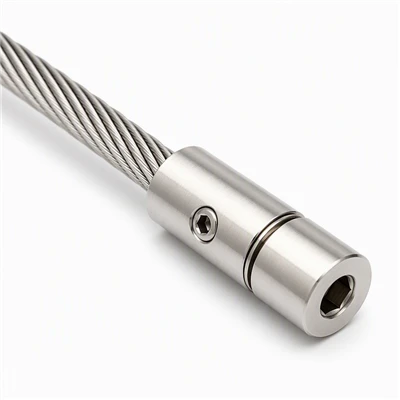
The Core Principle of Corrosion Resistance
When stainless steel contacts oxygen, a thin, dense and adherent passive chromium oxide film automatically forms on the surface. This protective layer tightly covers the metal substrate, isolating oxygen, moisture, salt ions and corrosive media. Crucially, the passive film features self-repair capability. If minor scratches damage the surface, new protective film will regenerate quickly in an oxygen-rich environment to prevent continuous corrosion.
Key Alloy Elements & Functions
Chromium (Cr)
The fundamental element for anti-corrosion. Stainless steel normally contains at least 10.5% chromium to form the stable passive film. Higher chromium content delivers better rust resistance.
Nickel (Ni)
Improves material toughness and stabilizes the metallographic structure. It strengthens the passive layer performance under low temperature and acidic conditions.
Molybdenum (Mo)
Effectively resists pitting and crevice corrosion triggered by chloride ions such as seawater salt spray. This is why molybdenum-bearing grades perform much better in marine scenarios.
Common Stainless Steel Grades for Wire Rope
Nantong Solite Rope Co., Ltd mainly supplies two mainstream grades for global projects:
304 Stainless Steel Wire Rope
Cost-effective choice for freshwater, atmospheric environment, food equipment and general outdoor facilities. Suitable for non-seawater corrosive conditions.
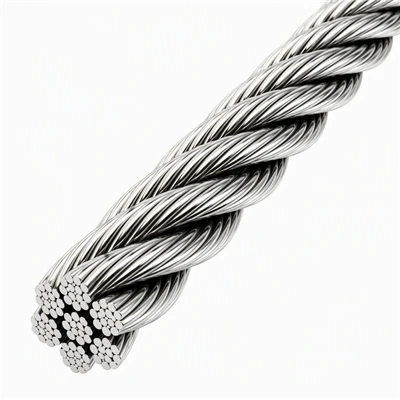
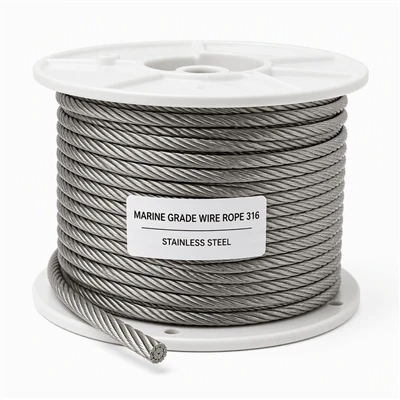
316 Stainless Steel Wire Rope
Added molybdenum component. Outstanding resistance against saltwater, salt spray and mild acid. The preferred option for offshore rigging, yacht fittings, coastal construction and marine equipment.
Important Practical Reminders
- The passive film relies on oxygen. Stainless steel wire rope still risks crevice corrosion in long-term fully sealed, oxygen-deficient environments.
- Avoid long-term contact with strong acids, strong alkalis and concentrated chloride solutions. Stainless steel is not completely corrosion-proof under extreme chemical conditions.
- Surface dirt, sediment and marine attachments should be cleaned regularly to maintain the integrity of the passive film and extend service life.
- Do not confuse stainless steel wire rope with galvanized carbon steel wire rope. Galvanized rope relies on sacrificial zinc coating; once the zinc layer wears off, the steel substrate will rust rapidly.
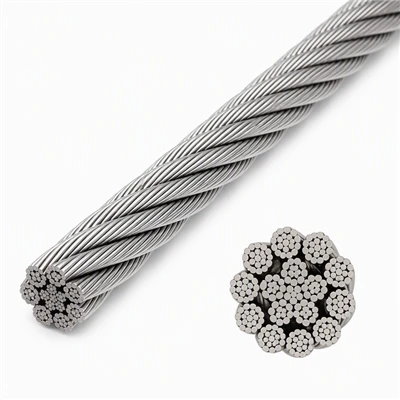
Simply put, stainless steel wire rope gains corrosion resistance from a self-healing chromium oxide passive film formed by chromium alloying. When selecting products, buyers should distinguish between 304 and 316 grades according to working environments. Nantong Solite Rope Co., Ltd provides customized stainless steel wire ropes of various constructions and diameters to meet diverse anti-corrosion lifting and tensioning demands worldwide.