How to Tell if Your Wire Rope is Actually 316 Stainless Steel: 3 Simple Field Tests for Buyers
SOLITE EXPERT GUIDANCE | 2026 EDITION
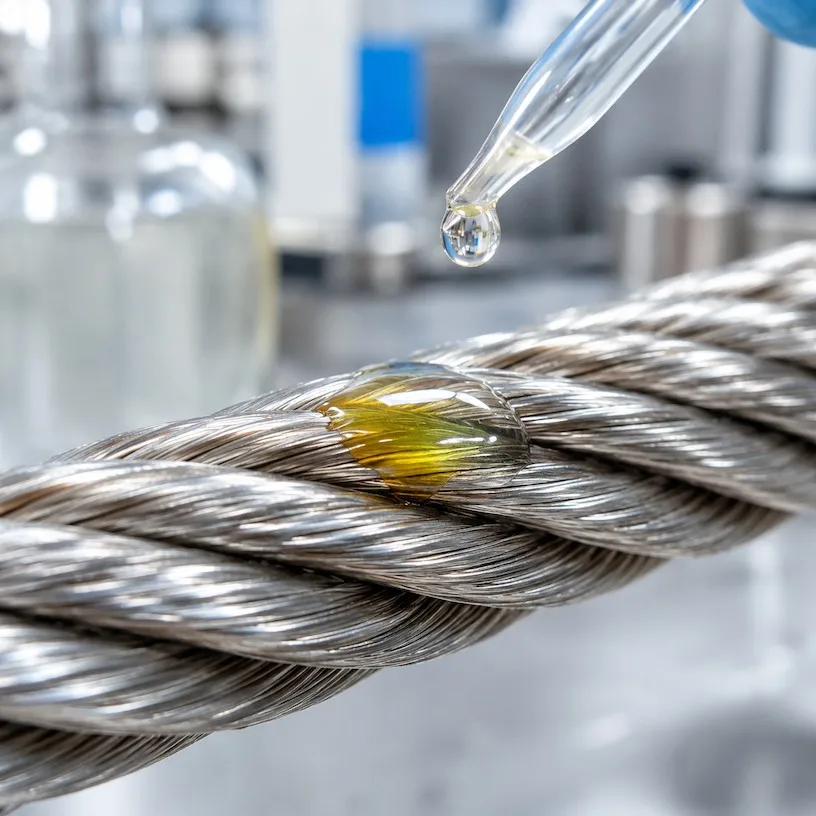
On-site engineering context for: How to Tell if Your Wire Rope is Actually 316 Stainless Steel: 3 Simple Field Tests for Buyers
When you pay a premium for AISI 316 Stainless Steel, you are paying for long-term corrosion resistance. Unfortunately, some suppliers mislabel 304 stainless or even standard carbon steel as 316. For a buyer, being able to verify the material on-site is essential to protecting your project from rust failure.
1. The Magnet Test (The First Filter):
While most austenitic stainless steels are non-magnetic, cold-working during the stranding process can make 316 slightly magnetic. However, it should still be significantly *less* magnetic than 304 or standard steel. If your magnet sticks firmly to the cable like it's a refrigerator door, it's almost certainly not 316.
2. The Chemical Drop Test (The Reliable Proof):
You can purchase simple "Molybdenum Test Kits" for under $50. A single drop of the reagent on the steel will change color if Molybdenum is present. Since 316 contains Molybdenum and 304 does not, this is a foolproof way to verify your "Marine Grade" pedigree.
3. The Mirror Finish Audit:
Look at the surface. Premium 316 ropes from SOLITE feature an "Ultra-Mirror" finish that is smoother and more reflective than standard grades. This smoothness isn't just for looks; it prevents salt crystals from getting a "grip" on the metal.
Why Documentation Still Matters:
While field tests are great, always demand a batch-specific MTC (Material Test Certificate). Ensure the "Ni" (Nickel) content is above 10% and "Mo" (Molybdenum) is above 2%. Explore our verified Stainless Steel Wire Rope range to ensure your coastal projects stay rust-free for decades.