Why is My Wire Rope Making a Clicking Noise? How to Diagnose Internal Friction and Fatigue
SOLITE EXPERT GUIDANCE | 2026 EDITION
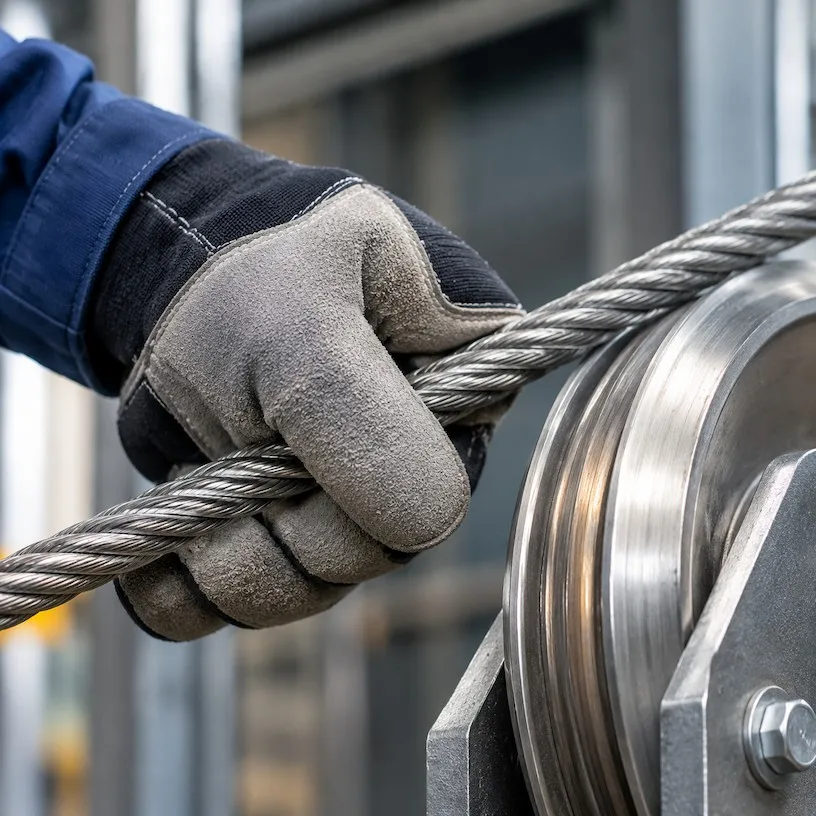
On-site engineering context for: Why is My Wire Rope Making a Clicking Noise? How to Diagnose Internal Friction and Fatigue
If you are operating a crane or a winch and you start to hear a rhythmic "clicking" or "popping" sound, you should pay close attention. In the world of high-tension engineering, sound is often the first warning of a structural crisis. For a non-technical manager, understanding these noises can prevent a catastrophic failure.
The "Click" of Death:
A clicking sound as the rope moves over a sheave usually indicates "internal wire breaks." As the rope bends, the broken ends of internal wires rub against their neighbors, creating a faint metallic snap. While the outside of the rope may look perfectly shiny, these internal snaps are a sign that the "reserve strength" of your asset is rapidly disappearing.
Inter-Wire Friction and Lubrication:
Another common noise is a "creaking" sound. This is a sign of extreme friction. If the internal lubricant has dried out or was never properly injected, the steel strands begin to grind against one another under load. This generates intense heat, which makes the steel brittle and prone to shattering under a sudden shock load.
Buyer's Diagnostic Tip:
Don't just look-listen. If you hear noise, perform a "Rag and Caliper" check immediately. Measure the diameter; if the rope has become "skinnier" in the noisy area, the core has collapsed. At SOLITE, we provide specialized lubrication analysis for our regular clients. Consider browsing our high-durability Crane and Lifting Wire Rope collection, which features vacuum-impregnated cores for near-silent operation. Remember: a quiet rope is a safe rope.