Wire rope, a vital industrial base material, is widely used in lifting machinery, elevators, bridges, and mining equipment. The rigor of its production process directly impacts product performance and safety.
Wire rope production begins with the selection of high-quality steel, typically high-carbon steel wire rod. After surface treatment to remove oxide scale, the wire drawing process begins. Through multiple drawing passes, the wire rod is gradually drawn into fine steel wire of the designed diameter. This process requires strict tension control and lubrication to ensure dimensional accuracy and surface quality. The wire then undergoes heat treatment, such as lead bath quenching or annealing, to adjust its mechanical properties and achieve an ideal balance of strength and toughness.
The next step is wire coating. Depending on the intended use, either galvanizing (for corrosion protection) or polishing (for high strength) can be selected. The coated wire is then drawn again to its final diameter and pre-deformed to eliminate internal stresses and enhance stability during subsequent twisting.
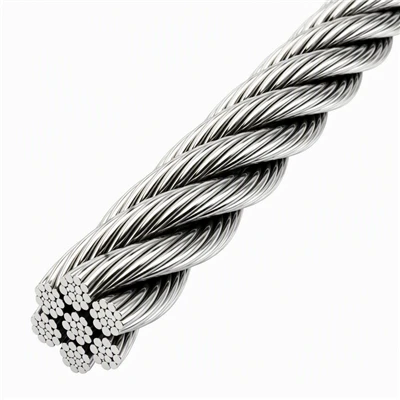
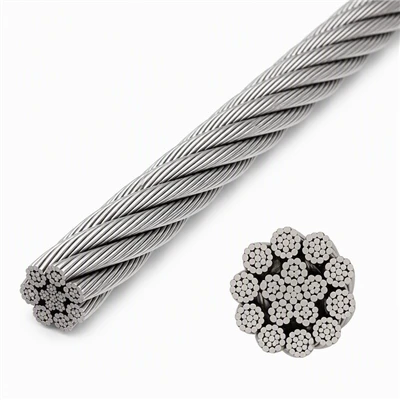
Twisting is the core process of wire rope production. Depending on the structural requirements, single or multiple steel wire strands are twisted in a specific direction (left-hand or right-hand) on a stranding machine to form a rope. The strands are then further twisted together with a central core on a rope closing machine to form a rope. During the twisting process, precise control of lay length, lay direction, and tension is required to ensure uniform stress distribution across the strands and avoid looseness or structural defects.
Finished wire ropes undergo rigorous quality inspections, including diameter measurement, breaking strength testing, torsion and bending tests, to ensure compliance with national standards and industry regulations. Finally, after oiling and packaging, the product is ready for delivery.
The production of wire ropes integrates materials science, machining, and precision manufacturing technologies. Each process requires precise control to produce a safe, reliable, and high-performance product.