Stainless steel wire ropes play a vital role in construction, shipbuilding, fishing, outdoor facilities, and even home decor. But when faced with the two common grades-304 and 316-many people wonder: Which one should they choose? How can they make the right purchase?
Core Comparison: 304 vs. 316 Stainless Steel Wire Ropes
| Comparison Item | 304 Stainless Steel Wire Rope | 316 Stainless Steel Wire Rope |
|---|---|---|
| Main Composition | 18% Chromium + 8% Nickel | 16% Chromium + 10% Nickel + 2% Molybdenum |
| Corrosion Resistance | Good, suitable for general environments | Excellent, resistant to salt spray, acids, alkalis and chloride ions |
| Application Scenarios | Indoor use, dry climates, general industrial applications, decorative lighting, guardrails | Coastal areas, chemical plants, marine vessels, swimming pools, medical equipment, long-term outdoor exposure |
| Strength | Tensile strength is comparable (typically 1570~1960 MPa) | Virtually identical strength to 304 in the same specifications |
| Magnetism | Weakly magnetic after cold working | Virtually non-magnetic |
| Price | Lower cost | Approximately 20%~30% more expensive than 304 |
| Service Life (Coastal) | May develop rust within 1~3 years | Remains virtually rust-free for 5~10+ years |
5 Key Factors to Consider When Selecting Stainless Steel Wire Ropes
1. Construction (Number of Strands × Number of Wires)
- 7×7: Relatively soft; suitable for general-purpose guy wires and guardrail cables.
- 7×19: Softer with a smaller bending radius; suitable for pulleys and slings.
- 1×19: Stiff with high tensile strength; suitable for guy wires and straight-pull supports.
Choose a multi-strand structure for frequent bending; choose a single-strand structure for straight tension only.
2. Diameter
- 1.5mm ~ 3mm: Crafts, clotheslines, small guardrails.
- 4mm ~ 8mm: Balcony railings, ship rope ladders.
- 10mm and above: Heavy-duty lifting, engineering guy wires.
The larger the diameter, the higher the breaking strength, but flexibility decreases.
3. Surface Finish
- Bright (Polished): Aesthetically pleasing, suitable for indoor decoration.
- Brushed (Matte): Scratch-resistant, more durable for outdoor use.
4. Coating Options
- Uncoated rope: High strength, does not retain water.
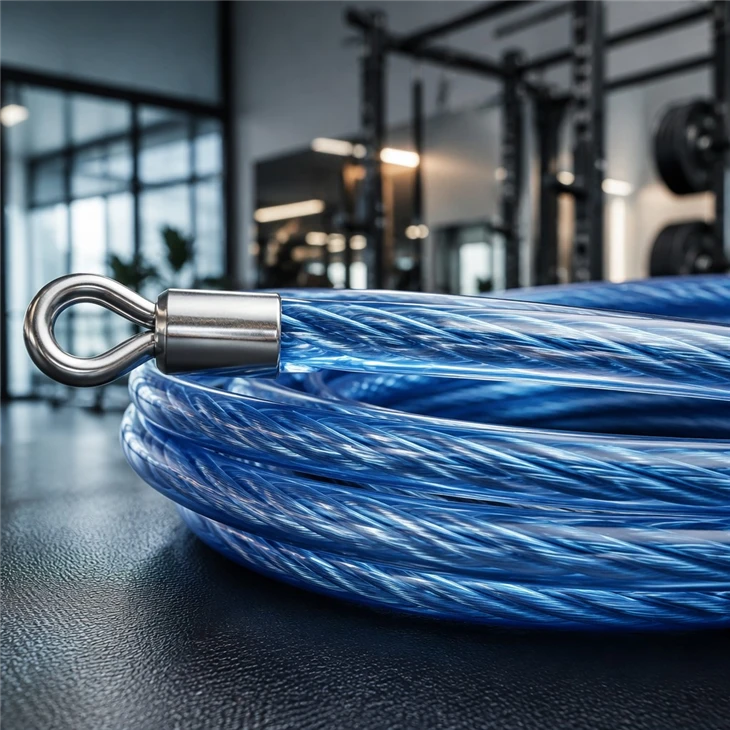
- PVC/PE-coated: Prevents cuts, available in various colors, but internal rust may occur as the plastic ages (unless made of stainless steel with a plastic coating).
5. Breaking Strength (Safety Factor)
- Genuine products will specify the minimum breaking strength. The actual working load should be ≤ 1/5 of the breaking strength (safety factor of 5:1).
For example: With a breaking strength of 1,000 kg, the maximum load should be 200 kg.
Tips to Avoid Common Mistakes
No need for regular lubrication? Wrong. Although stainless steel is inherently rust-resistant, in high-salt or dusty environments, regularly rinsing with clean water and applying a small amount of rust-preventive lubricant can extend its lifespan.
Knotting a wire rope reduces its strength. Any knot increases localized stress; it is recommended to use a crimping tool, U-clamps, or cast rope splices.
Do not mix new and old ropes. Old ropes have already undergone slight deformation, and mixing them will accelerate wear on the new rope.