How to Tell When Your Crane Wire Rope is No Longer Safe: A Non-Expert's Checklist
SOLITE TECHNICAL RESOURCE | 2026 EDITION
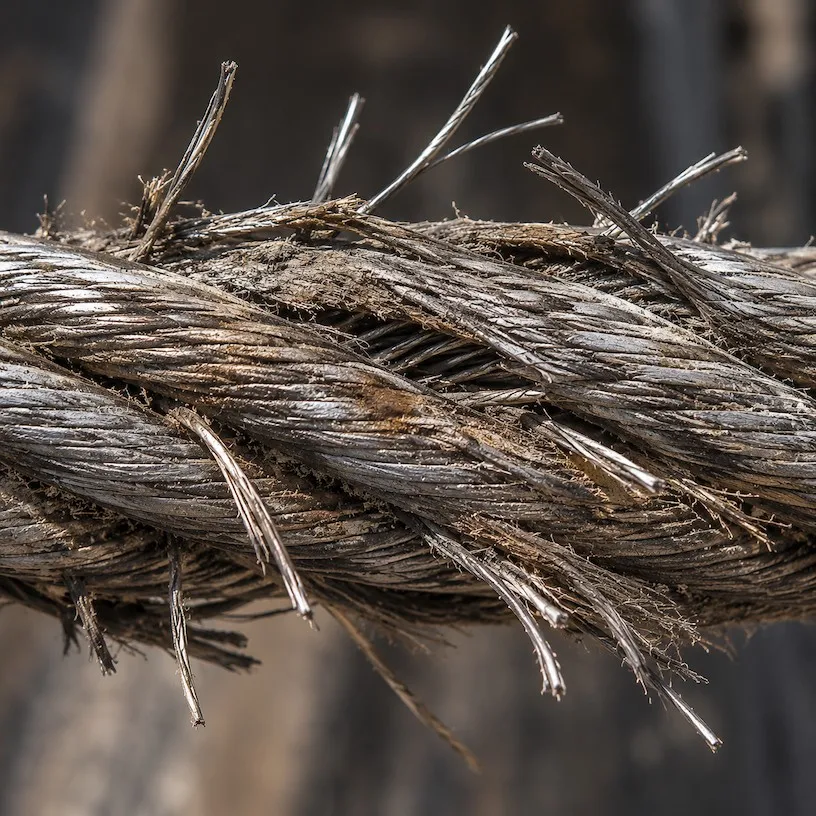
Practical Visual Guide: Real-world engineering context for 1. Inspection Guide (点检实务)
In the middle of a busy construction shift, you don't always have time to run a technical lab test. But for a business owner, knowing how to spot a "dying" rope with just your eyes can prevent a million-dollar accident. Let's look at the signs of a dangerous rope in plain English.
The "Porcupine" Sign:
If individual wires are sticking out from the strands like quills on a porcupine, these are "Broken Wires." According to ISO 4309, if you see more than a handful of these in a short section, the rope is finished. Why? Because when one wire snaps, the others have to work harder, leading to a chain reaction of failures.
The "Fatigue Mirror":
Look at the outer wires. Do they look flat and shiny, almost like a mirror? This is "Surface Abrasion." While a little bit is normal, if the wires are worn down by more than 1/3 of their original diameter, the rope has lost its strength.
The 7% Shrinkage Rule:
A wire rope should never look "skinny." If your 20mm rope now measures 18.5mm, the internal core has collapsed. This is a terminal sign. It means the "backbone" of the rope is gone.
SOLITE Expert Tip:
Don't just look-feel. Use a rag to run along the rope (while wearing gloves!). If it snags, you have a problem. For a professional opinion, consider browsing our high-performance Crane Lifting Cable range, which is engineered to resist these wear patterns longer than standard ropes. Safety isn't about using a rope until it breaks; it's about knowing exactly when to let it go.