How to Detect Internal Core Failure in Steel Wire Rope: Signs of a Hidden Danger
SOLITE TECHNICAL RESOURCE | 2026 EDITION
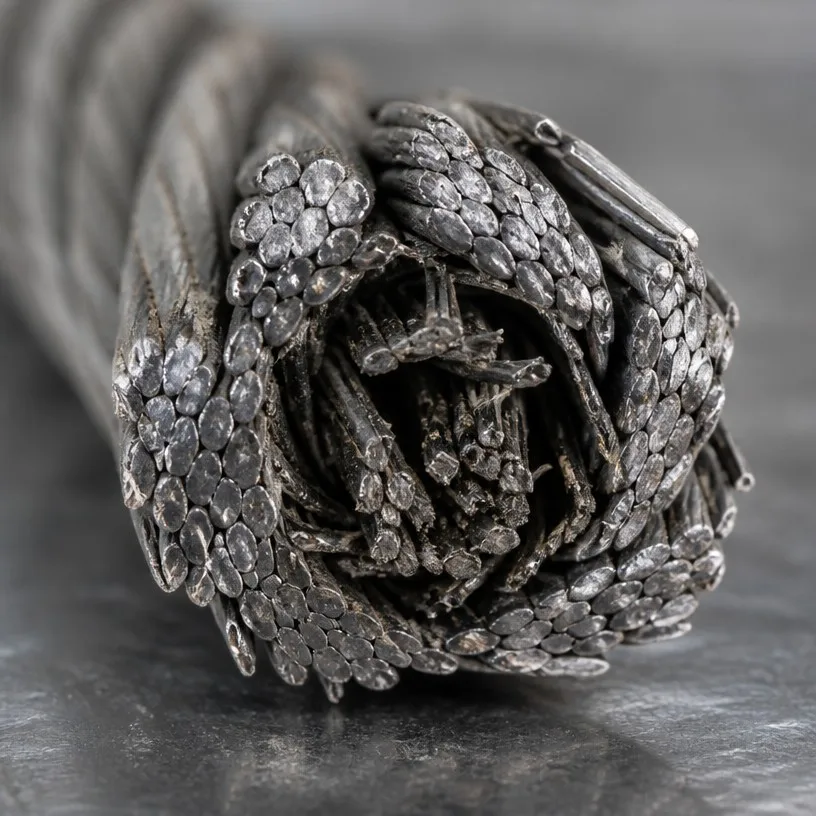
Practical Visual Guide: Real-world engineering context for 7. Damage Forensics (损伤诊断)
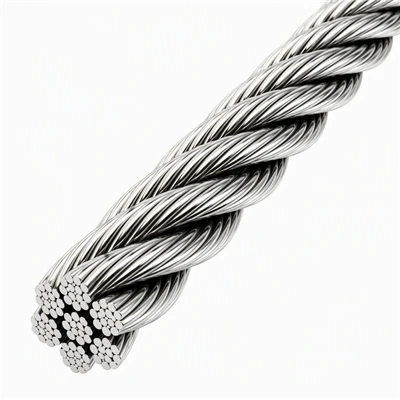
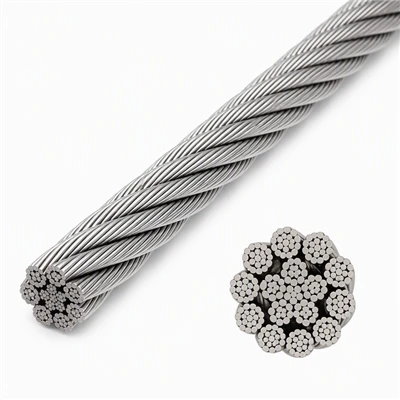
The core is the heart of the wire rope, providing the structural support that keeps the outer strands in place. When the core fails, the entire rope is compromised-often without a single broken wire showing on the surface. This is a "Hidden Danger" that every safety inspector must learn to identify.
Sign 1: Sudden Diameter Reduction:
If your 22mm rope suddenly measures 20mm in one specific area, the heart has stopped. A localized reduction in diameter is the #1 sign of internal core collapse. This happens when the core is crushed or corroded from the inside out.
Sign 2: The "Gap" Between Strands:
Look at the helical gaps between the strands (the valleys). If the gaps have become wider or "open," it means the core is no longer providing the internal pressure required to keep the strands tight. This leads to a loose, unstable construction.
Sign 3: Internal "Rouge" (Red Dust):
If you see a fine red powder emanating from the core, it means the internal wires of the IWRC are grinding against each other. This "fretting corrosion" is a terminal sign for any industrial cable.
The Danger of Fiber Core Decay:
In ropes with a "Fiber Core" (FC), moisture can cause the natural sisal fibers to rot. A rotting core loses its volume, causing the outer strands to "tumble" inward and clash.
At SOLITE, we advocate for the use of Independent Wire Rope Cores (IWRC) for all heavy-duty applications to ensure maximum geometric stability. Our senior engineering desk can perform a "Forensic Cross-Section Analysis" on your retired ropes to help you understand why they failed and suggest a more resilient core for your next project. Safety is about knowing what's happening on the inside.
Technical Consultation & Verification
Please Note: To ensure total safety and asset longevity, every technical proposal from SOLITE is manually reviewed by a senior engineer. We refuse automated pricing to guarantee precision. Contact our engineering desk for a professional project review.