The Arctic Strand: Maintaining Ductility and Impact Toughness at -162°C
SOLITE TECHNICAL ENCYCLOPEDIA | SERIES 05
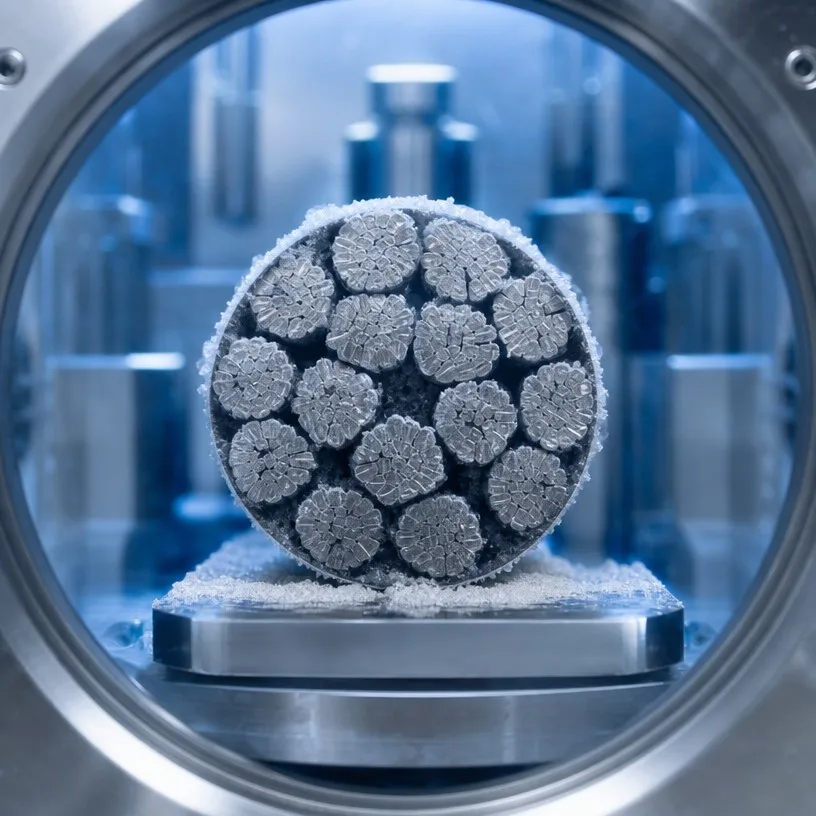
Forensic Engineering Visual: Analysis of the specific topic matter.
As global energy logistics shift toward Liquefied Natural Gas (LNG) and Arctic shipping routes, steel wire ropes are being pushed into the "Cryogenic Zone." At temperatures as low as -162°C, standard high-carbon steel undergoes a "Ductile-to-Brittle Transition" (DBTT), where it loses its ability to deform and instead shatters like glass under impact.
The Charpy V-Notch Test:
To engineer ropes for the extreme cold, SOLITE utilizes the Charpy V-Notch test to measure "Impact Toughness"-the amount of energy the steel can absorb during a sudden fracture. For cryogenic applications, we utilize specialized metallurgical infusions of Nickel and Manganese, which stabilize the austenite phase and prevent the steel from becoming brittle.
The Role of the Core in the Cold:
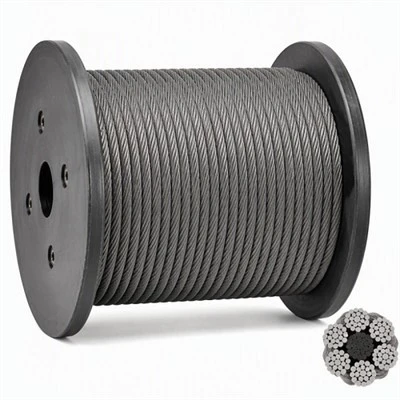
Synthetic fiber cores (FC) often become hard and "crushable" in extreme cold. For LNG mooring and Arctic hoisting, we mandate the use of Independent Wire Rope Cores (IWRC) that are treated with low-temperature, non-freezing lubricants. This ensures that the rope remains flexible and structural, even when covered in Arctic frost. In the frozen frontier, strength is useless without toughness.
Engineering White Paper Request
For large-scale infrastructure projects requiring bespoke material science or FEA stress-modeling, please contact our specialized technical desk. Full technical dossiers are available upon request.