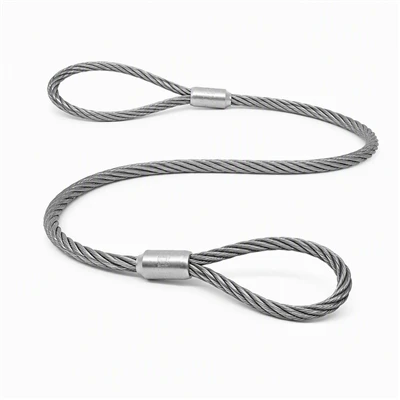
In the wire rope industry, 7x7 and 7x19 wire ropes are two very common structural types. Many procurement and engineering professionals face a key question when selecting the right product: Which type of wire rope is stronger and more durable? The decision requires a comprehensive evaluation of strength, flexibility, wear resistance, and the specific application scenario. We will analyze the performance differences between 7x7 and 7x19 wire ropes from multiple perspectives to help companies make more informed selection decisions.
Products Description
Characteristics of 7x7 Wire Rope
1. Relatively High Strength
Because each strand contains fewer but thicker wires, 7x7 wire rope typically has a slightly higher load-bearing capacity than 7x19 wire rope of the same diameter.
2. High Rigidity
The 7x7 wire rope has a compact structure and low flexibility, making it relatively stiff and resistant to bending. However, it offers excellent stability when supporting and lifting heavy loads.
3. Good Wear Resistance
The larger surface area of the thicker wires results in lower friction wear, making them suitable for linear tension applications as well as in winches and hoisting equipment.
Typical Applications:
Crane cables, heavy-duty guy wires, linear traction systems, port and terminal hoisting operations, etc.
Features of 7x19 Steel Wire Rope
1. Greater Flexibility
The higher number of fine wires allows the rope to bend more easily, making it suitable for drum winding, pulley systems, or applications requiring frequent bending.
2. Excellent Fatigue Resistance
7x19 wire ropes are less prone to breakage under long-term, repeated bending, making them ideal for high-frequency applications such as cableways, hoisting pulley systems, and cable pulleys.
3. Slightly lower load-bearing capacity
Since the individual wires in each strand are thinner, the load-bearing capacity is slightly lower than that of 7x7 ropes; however, this trade-off is acceptable in applications where flexibility and fatigue resistance are prioritized.
Typical applications:
Pulley systems, cableways, marine lifting slings, rope operations, mountaineering ropes, etc.
7x7 vs 7x19
| Specifications | 7x7 wire rope | 7x19 steel wire rope |
| Static Tensile Strength | High | High |
| Flexural Fatigue | Moderate | High |
| Flexibility | Low (high rigidity) | High (highly flexible) |
| Abrasion Resistance | High | Medium |
| Typical Applications | Lifting, straight pull, heavy-duty | Pulleys, drums, cableways, frequent bending |
- 7x7 wire rope: High load-bearing capacity, high rigidity, and excellent wear resistance; suitable for applications involving linear tension and heavy loads.
- 7x19 wire rope: High flexibility and strong resistance to bending fatigue; suitable for applications involving frequent bending, such as pulleys, drums, or cableways.
Key Factors in Selecting Steel Wire Ropes
In addition to structure, the following factors should also be considered:
Wire Material:High-carbon steel, stainless steel, or galvanized steel wires directly affect corrosion resistance and service life.
Wire Rope Diameter:The diameter determines the maximum load capacity and must be selected based on the equipment load and safety factor.
Core Type:Wire rope cores can be classified as steel-cored (IWRC) or fiber-cored (FC). Steel-cored ropes offer higher load-bearing capacity, while fiber-
Surface Treatment:Zinc plating, PVC coating, lubrication, and other treatments enhance corrosion resistance and service life.
Operating Environment:Outdoor, marine, high-temperature, frequent bending, or heavy-load environments each impose different performance requirements on wire ropes.