Why You Should Never Use a Wire Rope with 'Kinks' or Loops: The Science of Permanent Deformation
SOLITE EXPERT GUIDANCE | 2026 EDITION
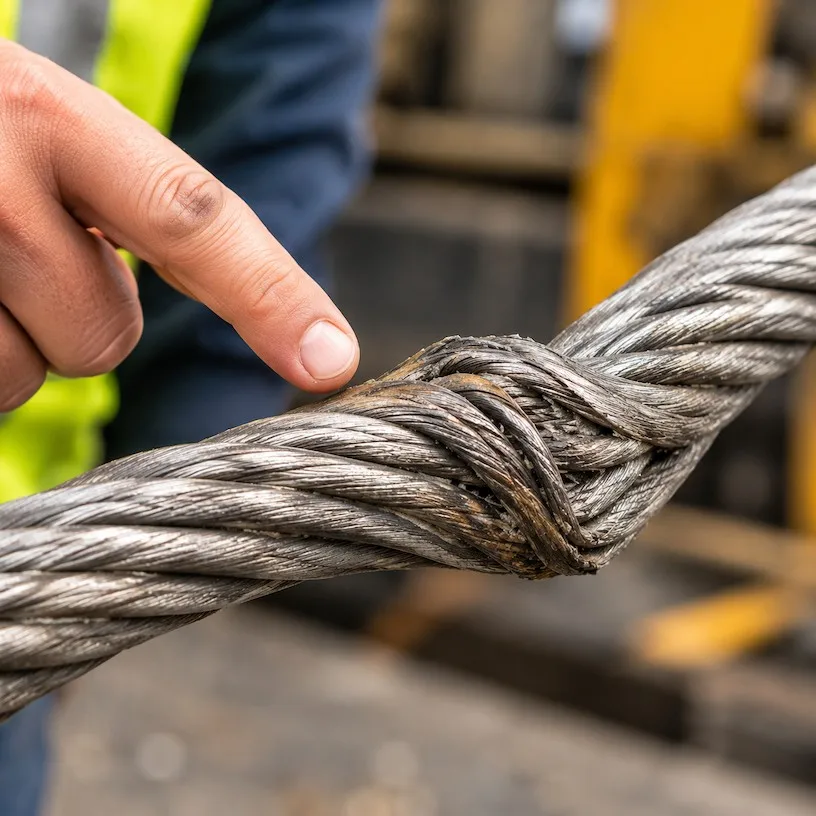
On-site engineering context for: Why You Should Never Use a Wire Rope with 'Kinks' or Loops: The Science of Permanent Deformation
A wire rope is a flexible machine, but it has a very long "memory." If a rope is mishandled during installation and develops a loop or a tight kink, the steel is permanently damaged at a molecular level. For a safety officer, a kinked rope is a rejected rope. Let's talk about why you can't just "straighten it out."
The "Point of No Return":
Steel has an "Elastic Limit." If you bend a wire too far, it enters the "Plastic Deformation" zone. Even if you use a hammer or a winch to pull the kink straight, the internal wires remain crushed and work-hardened. This spot is now a "Stress Riser"-a weak point that will be the first place the rope snaps when put under a heavy load.
Signs of a Dangerous Kink:
- A "dog-leg" or sharp bend that doesn't disappear when the rope is tensioned.
- Strands that look "open" or puffed out (birdcaging) near the bend.
- Surface wires that look flattened or shiny at the point of the kink.
Prevention During Installation:
90% of kinks happen during unspooling. Never pull a rope off a stationary reel from the side. Always use a rotating axle or turntable. At SOLITE, we provide color-coded "Unspooling Guides" with every shipment. If you have already kinked your rope, don't risk a life by using it. Check our Non-Rotating Wire Rope series for constructions that are specifically engineered to be torque-stable and resist kinking.