Wire ropes, as essential load-bearing and transmission components, are widely used in lifting machinery, elevators, bridges, ships, and mining equipment. However, wire ropes for different applications exhibit significant differences in structure, materials, and performance. Understanding these differences is crucial for the proper selection and use of wire ropes.
I. Differences by Structure
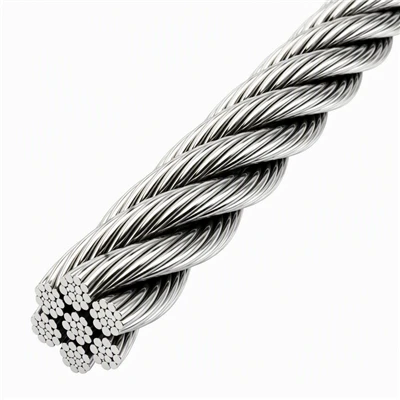
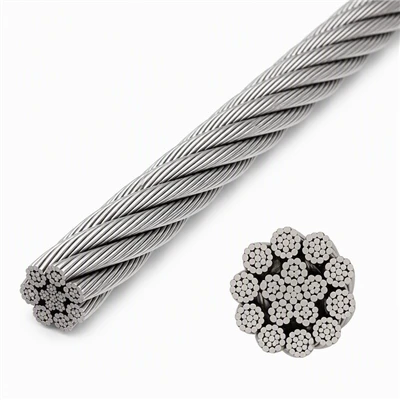
The structure of a wire rope directly affects its load-bearing capacity, flexibility, and wear resistance. Common structures include:
1.Point Contact Wire Rope: Made from multiple layers of twisted steel wires, each layer has point-to-point contact, such as 6×19 and 6×37 structures. This type of wire rope is simple to manufacture and relatively low in cost, but exhibits rapid wear between the wires. It is suitable for medium loads and general operating conditions.
2.Line Contact Wire Rope: Wire ropes have linear contact, such as 6×19S (Siru) and 6×19W (Warrington). Line-contact wire ropes feature denser wire arrangement, resulting in greater load-bearing capacity and improved wear resistance, making them suitable for applications requiring high loads and long life.
3.Surface-contact wire ropes: These use a special process to create surface contact between the wires, such as compacted strand wire ropes or sealed wire ropes. These wire ropes offer excellent compression and rotation resistance and are commonly used in harsh environments such as mine hoists and ropeways.
II. Classification by Application
Different applications require different wire rope performance, resulting in different wire rope designs and manufacturing methods:
1.Hoisting wire ropes: These require high strength, excellent fatigue resistance, and wear resistance. They typically utilize line-contact or surface-contact structures, such as 6×37+FC (fiber core) or 6×36WS+IWR (independent wire rope core).
2.Elevator Wire Rope: Requires high flexibility, low elongation, and stable operating performance. Typically, 8×19S or 8×19W construction is used, with a galvanized coating for enhanced corrosion resistance.
3.Ship and Offshore Engineering Wire Rope: Due to long-term exposure to high-salt and high-humidity environments, this type of wire rope requires excellent corrosion resistance. Typically, galvanized or stainless steel is used, with anti-rotation construction (such as 18×7 or 35×7).
4.Mining and Hoisting Wire Rope: Requires extremely high breaking strength and impact resistance. Multi-layered, compacted wire rope or sealed wire rope is often used to ensure safety under heavy loads and harsh conditions.
III. Classification by Material and Surface Treatment
1.Carbon Steel Wire Rope: The most common, low-cost, and suitable for general industrial use, but with poor corrosion resistance.
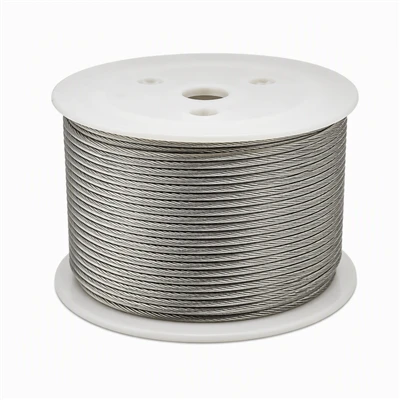
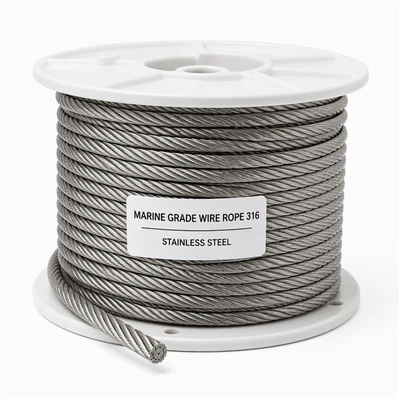
2.Stainless Steel Wire Rope: Made of stainless steel such as 304 and 316, it offers excellent corrosion resistance and is suitable for special environments such as chemical, food, and marine applications.
3.Galvanized Wire Rope: Hot-dip galvanizing or electroplating enhances corrosion resistance and is suitable for outdoor or humid environments, such as construction hoisting and bridge maintenance.
4.Coated Wire Rope: Some high-end wire ropes feature polyurethane or nylon coatings for enhanced wear and corrosion resistance, making them suitable for specialized industrial applications.
IV. Classification by Rotation Resistance
Wire ropes may rotate when subjected to load, compromising safety. Based on their rotation resistance, they can be classified as follows:
•Non-rotation-resistant wire ropes: Standard construction, suitable for stationary or low-speed applications.
•Micro-rotation wire ropes: Wire ropes with a low tendency to rotate, such as 18×7 or 35×7, are suitable for cranes and elevators.
•Fully rotation-resistant wire ropes: These, such as multi-strand independent wire rope (IWR) structures, are virtually rotation-resistant and suitable for high-precision lifting and offshore platforms.
Wire ropes differ primarily in their structure, application, materials, and rotation resistance. Choosing the right wire rope requires comprehensive consideration of factors such as load conditions, operating environment, and service life. In practical applications, relevant standards (such as GB/T 20118 and ISO 4309) should be followed to ensure safety and reliability. In the future, with advances in materials science and manufacturing processes, wire rope performance will continue to improve, meeting even more complex engineering requirements.