High-Tension Architecture: The Structural Logic of Stainless Steel Tension Rods and Cables
SOLITE TECHNICAL KNOWLEDGE SERIES
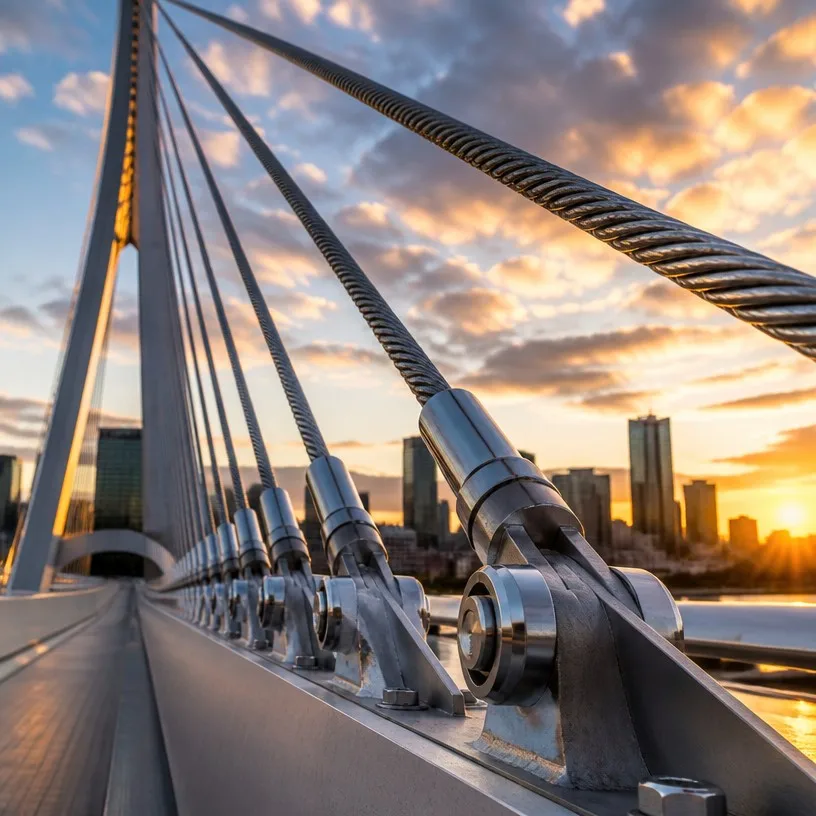
Modern architecture is increasingly reliant on tension rather than compression. From the sweeping roofs of international stadiums to the glass facades of skyscrapers, stainless steel cables and tension rods have become the 'invisible infrastructure' of aesthetic engineering.
The Aesthetic vs. Structural Balance:
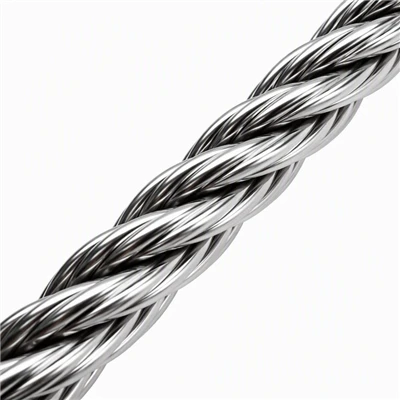
In architectural applications, the rope is no longer hidden; it is a visible design element. This requires a unique material profile: AISI 316 Stainless Steel. While its tensile strength is slightly lower than carbon steel, its corrosion resistance and surface brilliance are unmatched. At SOLITE, our 'Ultra-Mirror' finish process involves multiple stages of mechanical polishing to ensure a surface that resists airborne contaminants and provides a high-end reflective finish.
Tensioning and Fitting Integrity:
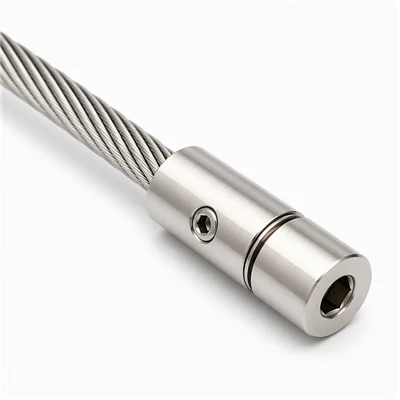
The failure point of an architectural cable system is rarely the rope itself; it is the end fitting. Swaged terminals and threaded studs must be engineered to hold 100% of the rope's breaking force. Furthermore, architectural systems must account for 'thermal expansion and contraction.' In large-scale tensile structures, the ropes must be periodically re-tensioned to maintain the geometric integrity of the building. We provide bespoke assembly solutions where every fitting is swaged under controlled factory conditions to ensure that the beauty of the design is supported by absolute structural certainty.
Engineering Consultation
Our technical department provides customized stress-analysis and lifecycle modeling for complex infrastructure projects. Contact our specialists for a full technical dossier.