The Anatomy of a Discard: Applying ISO 4309 in Extreme Industrial Environments
SOLITE TECHNICAL KNOWLEDGE SERIES
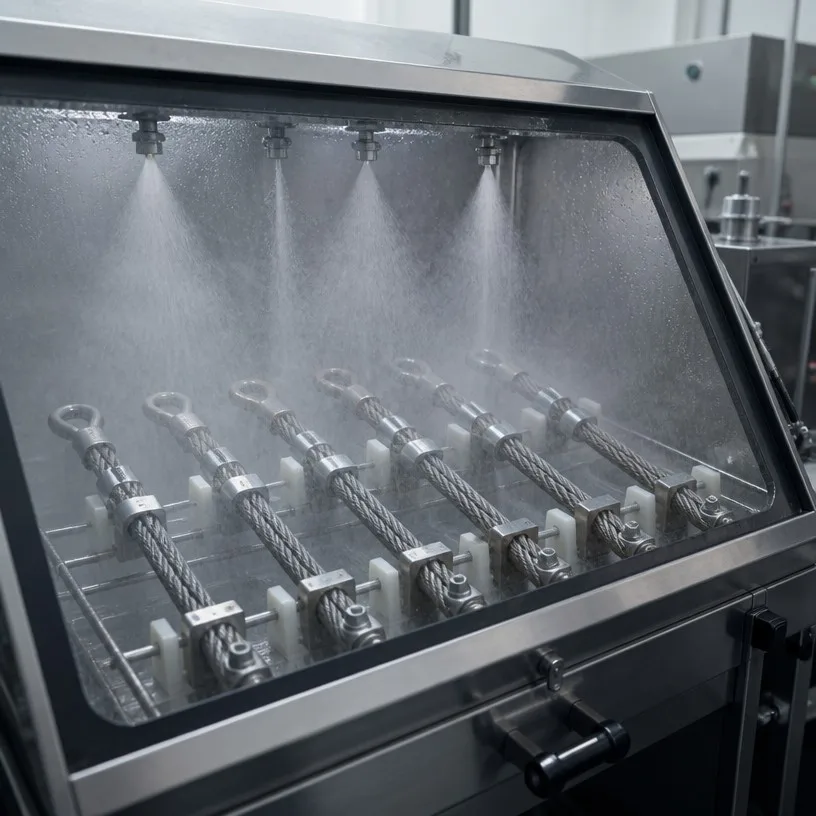
Determining when a wire rope has reached its 'Safety Cliff' is the most critical decision an on-site engineer can make. The industry standard, ISO 4309, provides the framework, but its application requires a deep understanding of the forensic life of steel.
The Cumulative Damage Model:
A wire rope does not fail at a single point in time; it accumulates damage through four primary modes: visible wire breaks, diameter reduction, corrosion, and structural deformation. Under ISO 4309, discard criteria are calculated based on the number of broken wires over a specific length (usually 6d or 30d). However, a simple count is often misleading. If the breaks are concentrated in a single strand, the rope is far more dangerous than if they are distributed evenly.
The Danger of Internal Corrosion:
Diameter reduction is the 'silent' indicator. If a rope's diameter has reduced by more than 7% of its nominal size-even without visible wire breaks-it must be discarded. This reduction usually signifies that the internal core has collapsed or that internal corrosion has hollowed out the strands. In high-humidity or marine environments, this internal decay happens out of sight.
Predictive Maintenance:
At SOLITE, we advocate for a data-driven approach to safety. By combining periodic MFL (Magnetic Flux Leakage) data with ISO 4309 visual logs, we create a 'Service Life Profile' for our clients. Safety isn't about replacing a rope when it's broken; it's about predicting its failure curve so it can be retired exactly one step before the cliff.
Engineering Consultation
Our technical department provides customized stress-analysis and lifecycle modeling for complex infrastructure projects. Contact our specialists for a full technical dossier.