The Metallurgy of Safety: Why Chemical Composition in Steel Rods is the First Barrier of Defense
SOLITE TECHNICAL KNOWLEDGE SERIES
In the wire rope industry, compliance begins long before the first wire is drawn. It begins in the steel mill. A high-performance rope is only as strong as the wire rod from which it is born. To truly master safety, one must understand the metallurgical profile required for extreme industrial tension.
The Carbon Content Equation:
High-quality wire ropes typically utilize high-carbon steel (C70 to C90). Carbon is the element that provides the hard, tensile strength required for 1960 MPa and 2160 MPa grades. However, carbon alone is not enough. The inclusion of Manganese (for toughness) and Silicon (for deoxidation) must be precisely balanced. If the phosphorus or sulfur levels exceed 0.025%, the steel becomes brittle, leading to micro-fissures that act as 'stress risers' during the drawing process.
The Role of Micro-Structure:
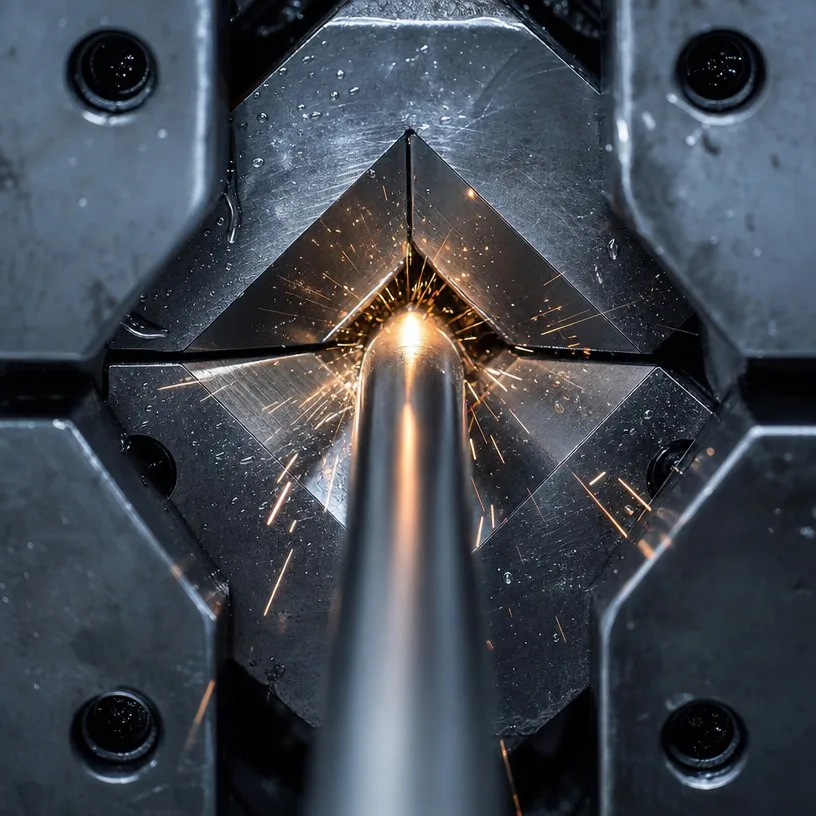
The pearlite structure of the steel rod determines its ductility. Through a process known as 'patenting'-a specialized heat treatment-we transform the steel into a fine pearlitic state. This allows the wire to be drawn through multiple dies while maintaining its crystalline integrity. Without this metallurgical precision, a rope might meet its breaking load in a laboratory but fail prematurely in the field due to lack of fatigue resilience.
Traceability from the Mill:
At SOLITE, every batch of wire rope is accompanied by an MTC that traces back to the specific heat number of the steel mill. We don't just test the final rope; we audit the chemical soul of the material. Compliance is the documented proof that your infrastructure is built on a foundation of metallurgical purity.
Engineering Consultation
Our technical department provides customized stress-analysis and lifecycle modeling for complex infrastructure projects. Contact our specialists for a full technical dossier.