The quality of stainless steel wire ropes directly determines their strength, service life, stability, and safety. Superior quality ensures greater reliability, enhanced safety, and improved cost-effectiveness; inferior quality, conversely, increases potential hazards, accelerates wear and tear, and elevates operational costs.
When procuring stainless steel wire ropes, assessing their quality involves a comprehensive evaluation across six key dimensions: appearance, dimensions, material composition, stranding process, mechanical properties, and labelling and certification.
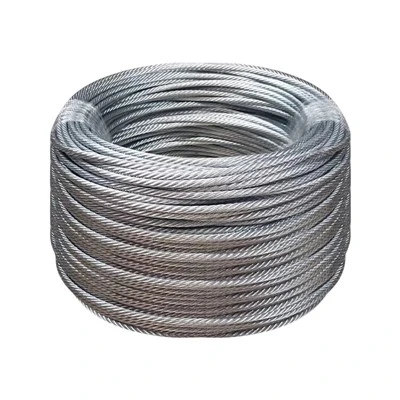
High-quality steel wire ropes should have a smooth, clean surface with uniform colouration and no obvious defects.
Surface defects: free from scratches, indentations, dents, burrs, rust, pitting, or pitting marks; Minor surface rust may be removed by wiping; If rust stains remain after wiping, the item is deemed non-compliant.
Oiling / Lubrication: Surface lubricant applied uniformly without accumulation or missed areas; hemp core sufficiently oil-impregnated.
Galvanised coating (if present): The coating shall be uniform, free from cracking, flaking, zinc blisters, or exposed steel.
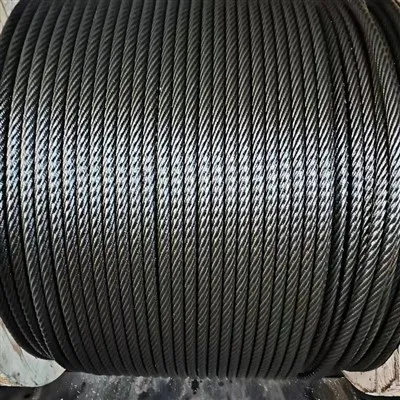
Looseness: The rope strands are tightly wound and neatly arranged, with no loose strands, skipped filaments, or misaligned filaments; when lightly stroked by hand, there is no resistance.
Straightness: Naturally straight with no noticeable undulations, twists, or bends.
Diameter measurement: Using a vernier caliper / diameter gauge, measure at three or more positions under tension-free conditions; diameter deviation must comply with standards.
Out-of-roundness: Cross-section uniformity, maximum/minimum diameter difference ≤ diameter tolerance, to prevent uneven stress distribution.
Weight per unit length: Deviation from standard value ≤±5%, reflecting material density and structural integrity.
Structural conformity: Verify that the number of yarns/threads, twist direction, and twist pitch comply with the design specifications, with no mis-twisting or missing threads.
Grade confirmation: Common grades include 304 and 316, with 316L offering superior corrosion resistance.
Component testing: Key elements meet standards.
Tightly twisted: minimal clearance between strands and wires, with no slack or 'lantern-like' bulging.
Uniform twist pitch: The twist pitch remains consistent along the entire length of the rope, with deviation not exceeding ±5%.
No welded joints / No broken strands: The entire rope is free from welded joints, internal broken strands, inclusions, or air pockets.
Non-fraying: After cutting, the rope ends do not unravel or spring back, ensuring consistent twisting quality.
Breaking strength: The breaking strength of the entire rope, e.g. 1mm 304 stainless steel rope ≥1.57kN.
Single-filament properties: Tensile strength ≥1400 MPa, elongation ≥15%, exhibiting excellent toughness and resistance to brittle fracture.
Twisting / Bending: Twist count ≥ 20 times (1mm rope), repeated bending without cracks or broken strands.
Fatigue life: Dynamic load scenarios must pass fatigue testing, with the number of cycles meeting the required standard.
Packaging labelling: Clearly indicate manufacturer, specifications, material composition, applicable standards, breaking tensile strength, production date, and certificate of conformity.
Quality documentation: Provide material certificates, factory inspection reports, and third-party testing reports.
Manufacturer credentials: Opt for reputable large-scale manufacturers possessing production licences, quality system certifications, and comprehensive after-sales support.
Quick-judgement mnemonics:
-
First, inspect for surface defects
-
Second, verify dimensions meet specifications
-
Third, check material grade 304/316
-
Fourth, feel for tight, even twisting
-
Fifth, test tensile strength to standard
-
Sixth, ensure documentation is complete and comprehensive