Why Thick Wires Last Longer in Mining but Snap in Elevators: Abrasion vs. Fatigue
SOLITE TECHNICAL RESOURCE | 2026 EDITION
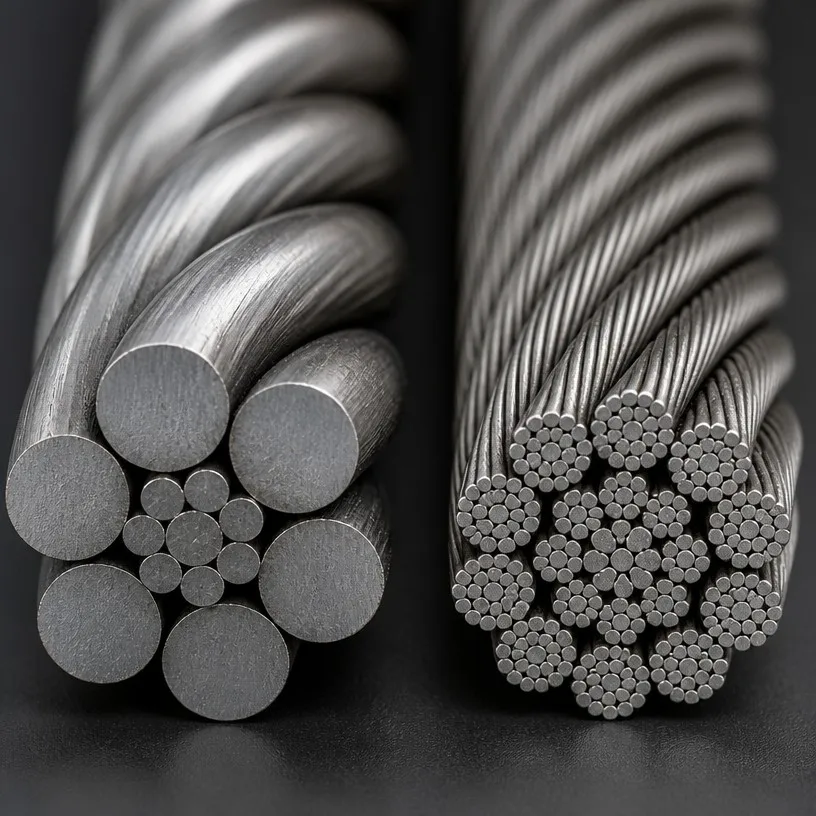
Practical Visual Guide: Real-world engineering context for 6. Performance Trade-offs (性能权衡)
In the wire rope world, there is a constant battle between two enemies: Abrasion (wearing down from the outside) and Fatigue (snapping from the inside due to bending). The size of the individual wires in your rope determines which enemy you are fighting.
The "Thick Wire" Logic (Abrasion Resistance):
In applications like mining or dragging winches, the rope is constantly rubbing against rocks, sand, and rough steel. For this, you need "Large Outer Wires" (like in a 6x19 Seale construction). These thick wires provide a massive "Wear Allowance." They can lose 10-15% of their thickness and still be safe.
The "Thin Wire" Logic (Fatigue Resistance):
In a high-speed elevator or a complex pulley system, the rope bends back and forth millions of times. For this, you need "Many Thin Wires" (like in a 6x37 or 8x19 construction). Thin wires are flexible; they can bend around small sheaves without the metal "work-hardening" and snapping.
The Fatal Mistake:
If you use a "Mining Grade" rope (thick wires) on an elevator, the wires will snap like dry twigs within months because they are too stiff to bend. If you use a "Flexible Grade" rope (thin wires) in a mine, the wires will wear through and fray almost instantly.
Finding the Balance:
At SOLITE, we help our clients navigate this trade-off. We analyze your sheave diameter and your environment to find the "Sweet Spot" construction. Whether you need a rugged Steel Wire Rope Sling or a high-flex lift cable, we ensure the wire size matches the mission.