Metal Forensics: Decoding the Silent Signals of Internal Wire Rope Failure
In the high-stakes world of heavy lifting, the most dangerous failures are the silent ones. While traditional safety protocols focus on surface issues like "external broken wires" or "kinking," the true health of a steel wire rope is determined within its core-a realm that visual inspection simply cannot reach.
The Science of MFL (Magnetic Flux Leakage):
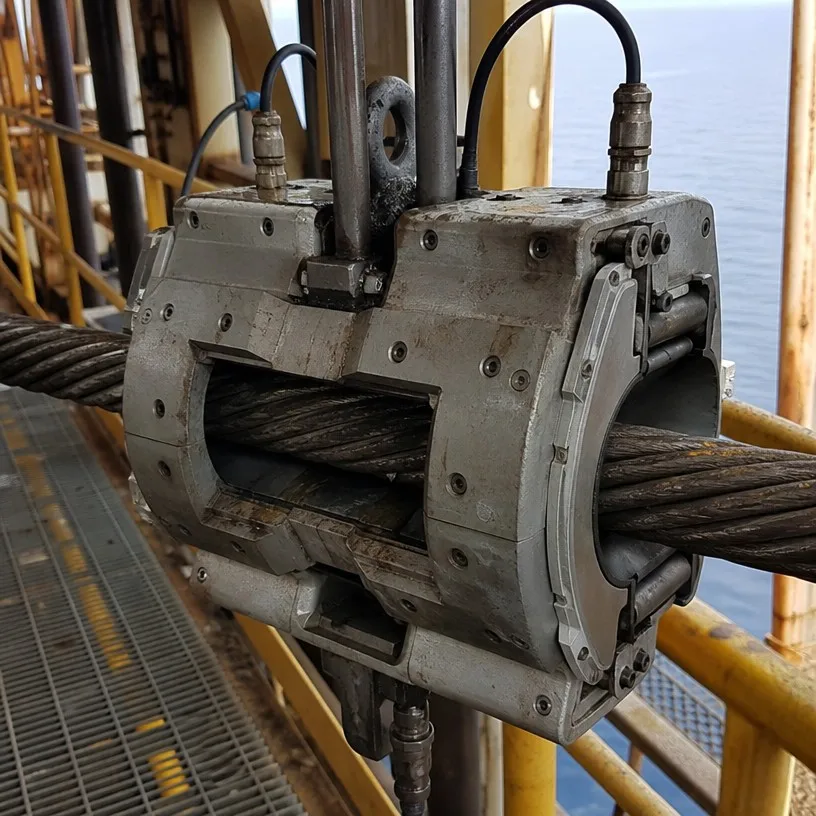
At SOLITE, we treat inspection as a forensic science. We utilize Magnetic Flux Leakage (MFL) technology, which acts like an "MRI" for industrial cables. By passing the rope through a high-saturation magnetic field, specialized sensors can detect flux leaks caused by internal wire breaks or localized metallic loss (LMA). This allows us to "hear" the rope's structural soul long before a surface fissure appears.
Decoding the 'Red Powder' (Rouge):
One of the most critical forensic markers is the appearance of a fine, reddish-brown powder emanating from the strands. This is "fretting corrosion," known as metallic rouge. It is the forensic evidence of inadequate internal lubrication causing strands to grind against one another. By the time rouge is visible to the naked eye, the internal metallic cross-section may have already degraded by more than 10%, putting the operation at the edge of a "Safety Cliff."