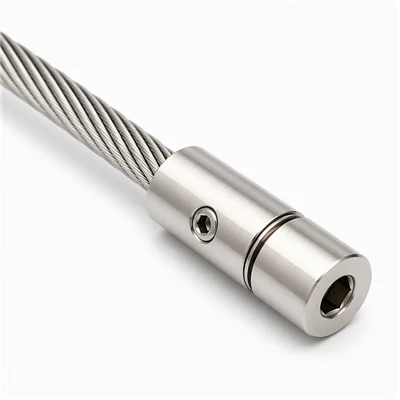
The DIY 5-Minute Daily Inspection: A Simple Checklist for Crane and Winch Operators
SOLITE EXPERT BUYER'S GUIDE | 2026 EDITION
Practical Visual Guide: Helping you make informed procurement decisions.
You don't need to be a laboratory scientist to keep your wire ropes safe. Most major failures can be prevented by a simple daily visual check. We've distilled the complex international safety standards into a 5-minute checklist that every operator should use before they start their shift.
1. The "Glove Test" for Broken Wires:
Wear a sturdy leather glove and run a rag or your hand (carefully!) along a section of the rope. If the rag snags, you have a "broken wire" (a porcupine). If you see more than 3 snaps in a single strand length, or 6 snaps in a total rope length, call your safety officer immediately.
2. Check for "Birdcaging":
Look at the rope as it comes off the pulley. Do the strands look like they are puffing out or separating from the center? This is "birdcaging," usually caused by pulling the rope through a tight pulley or sudden shock loading. A birdcaged rope cannot be repaired-it must be replaced.
3. Look for "The Shine":
A healthy rope should be evenly coated in lubricant. If you see dry, "shiny" steel patches, it means the protective grease has been rubbed off. Without oil, the wires will rub together and snap internally.
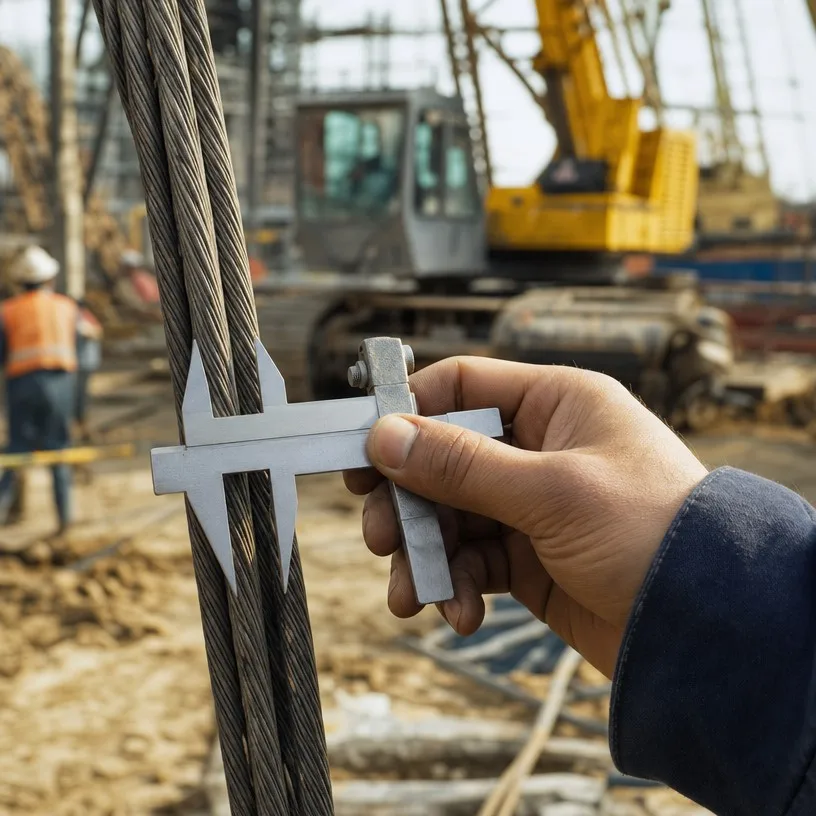
4. Measure the Diameter:
Keep a small caliper in your tool belt. Measure the rope's widest point. If the rope has become 5% thinner than it was when new (e.g., a 20mm rope now measuring 19mm), it means the internal core is collapsing or corroding.
5. Spot the Heat:
Does any part of the rope look discolored (rainbow-colored or blue)? This is a sign of heat damage, possibly from an electrical arc or high-friction rubbing. Heat makes steel brittle and prone to shattering.
By spending just 5 minutes a day on these checks, you aren't just following rules-you are protecting your equipment and, more importantly, the lives of your team. If you find a red flag, don't ignore it. Replacing a rope is a minor expense; dealing with a failure is not.
Have Questions About Your Next Purchase?
Our procurement consultants are ready to assist you in matching the right wire rope technology to your specific machine. We provide full landed cost estimates and technical data sheets upon request.