The Geometry of Density: How Compacted Strand Technology Redefines Tensile Limits
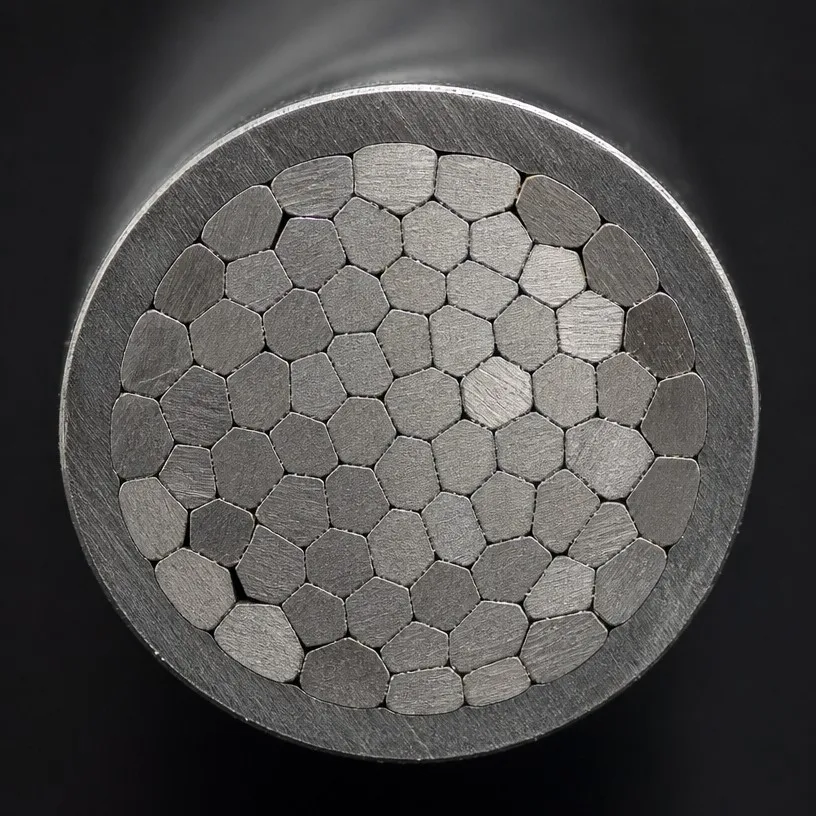
In the metallurgy of wire rope, density equals destiny. For decades, the industry accepted the physical limitations of "round wire" construction-where the air gaps between strands were a necessary but inefficient reality. Compacted Strand technology represents the geometric evolution of the modern wire rope.
The Compaction Process:
Traditional wire rope is composed of round wires twisted into strands. Compacted rope takes this a step further: the finished strand is drawn through a high-precision die, which physically crushes the round wires into a flatter, more efficient hexagonal-like shape. This eliminates the "voids" within the rope's interior.
The Mechanical Dividends:
First, the metallic cross-sectional area is increased by 10-15%. This results in a massive boost to the Minimum Breaking Load (MBL) without increasing the rope's diameter. Second, compaction creates a "smooth surface" circumference. In standard ropes, the corrugated surface acts like a saw against pulley sheaves. SOLITE Compacted ropes provide a vastly larger contact area, reducing contact pressure and extending the life of your mechanical sheaves by up to 30%.