The Kinetic Balancing Act: Engineering Modulus of Elasticity (MoE) in Specialized Hoisting
SOLITE GLOBAL ENGINEERING NEWS | ISSUE 2026-Q4
High-precision industrial documentation: Product details and application scenarios.
In the advanced calculus of industrial hoisting, the "strength" of a wire rope is merely a threshold. The true metric of performance in high-precision systems-such as high-speed elevator shafts or deep-sea crane operations-is the Modulus of Elasticity (MoE). Understanding how to engineer and stabilize this modulus is what separates a standard lifting cable from a precision kinetic instrument.
Defining the Modulus of Elasticity (MoE):
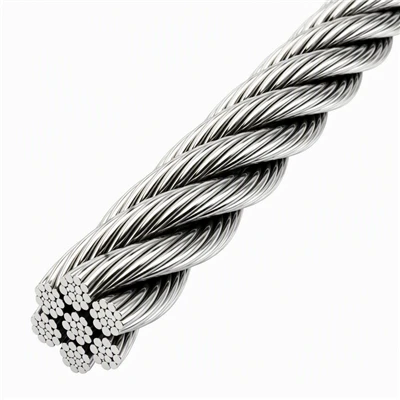
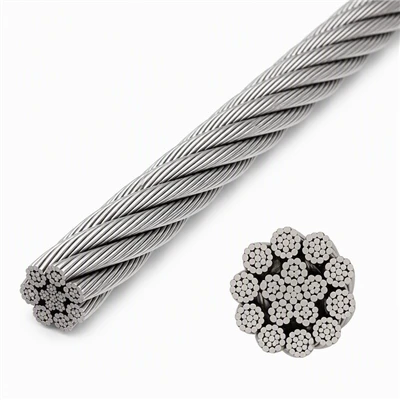
The MoE of a wire rope is not a constant value like it is for solid steel. Because a rope is a complex machine composed of multiple wires and strands, its "elastic behavior" is a combination of the material's young's modulus and the geometric "settling" of the strands. In applications where sub-millimeter positioning is required, an unpredictable MoE leads to "cable bounce" and positioning errors that can trigger safety interrupts.
Geometric vs. Material Elasticity:
When a rope is first manufactured, it possesses a low MoE due to the air gaps between the wires. As the rope is loaded, these gaps close-a process known as constructional stretch. SOLITE engineers manage this by utilizing controlled pre-stretching and "Hybrid-Core" designs. By combining high-carbon steel with precision-tensioned fiber inserts, we can create a "Linear Elastic Response," where the rope behaves predictably from the very first cycle.
The Role of the Hybrid Core:
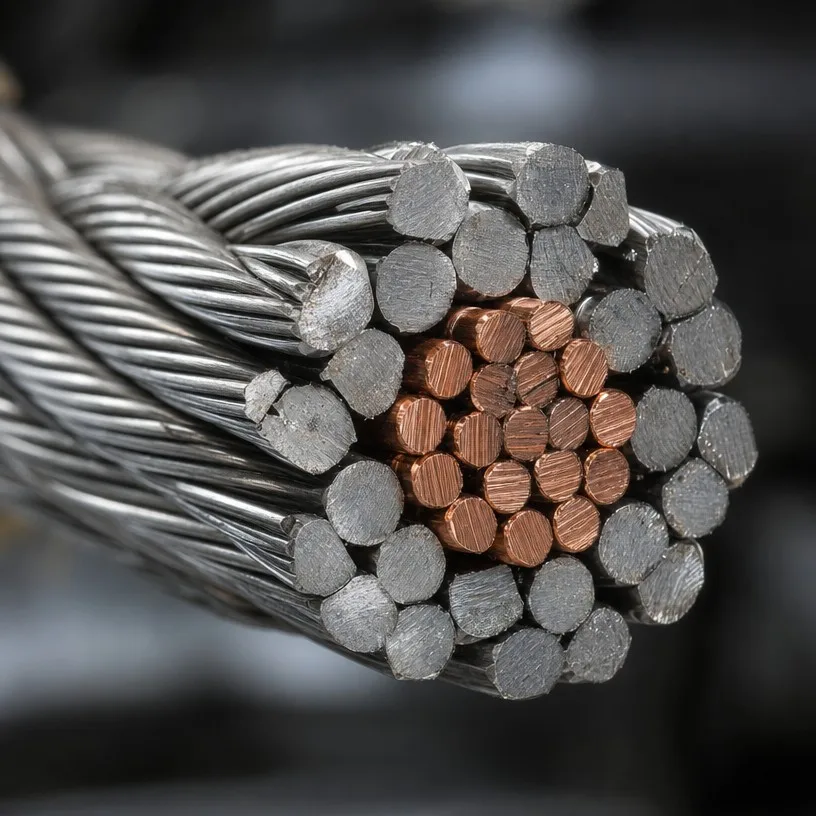
In high-dynamic environments, a pure steel core (IWRC) may be too rigid, while a pure fiber core (FC) may be too compliant. Our technical breakthrough involves a "Stress-Distributing Hybrid Core." This construction utilizes a small-diameter steel center surrounded by high-tenacity polymer fibers. This architecture provides the crushing resistance of steel with the vibrational damping of fiber, resulting in an MoE that is 20% more stable under varying thermal and load conditions. For the engineer, this means less time spent on recalibrating sensors and more time focused on operational throughput. Precision is the ultimate premium in the geometry of tension.
Project Specification Support
Do you require technical comparative data or dynamic simulation twins for your specific hoisting infrastructure? Contact our dedicated engineering desk for a bespoke technical dossier.