6x19 vs 6x36 Wire Rope: Flexibility or Abrasion Resistance?
6×19 and 6×36 wire rope are two widely used stranded steel wire rope families for cranes, hoists, lifting equipment, construction machinery and general industrial applications.
The main design difference is the number and relative size of wires within each strand. In general, 6×19 constructions use fewer, larger wires and provide good resistance to external wear, while 6×36 constructions use more, smaller wires and generally provide greater flexibility and bending fatigue performance.
However, selecting between 6×19 and 6×36 should not be based on construction alone. The correct choice also depends on rope diameter, core type, sheave diameter, drum configuration, operating cycles, load, speed, environment and required service life.
6×19 vs 6×36: At a Glance
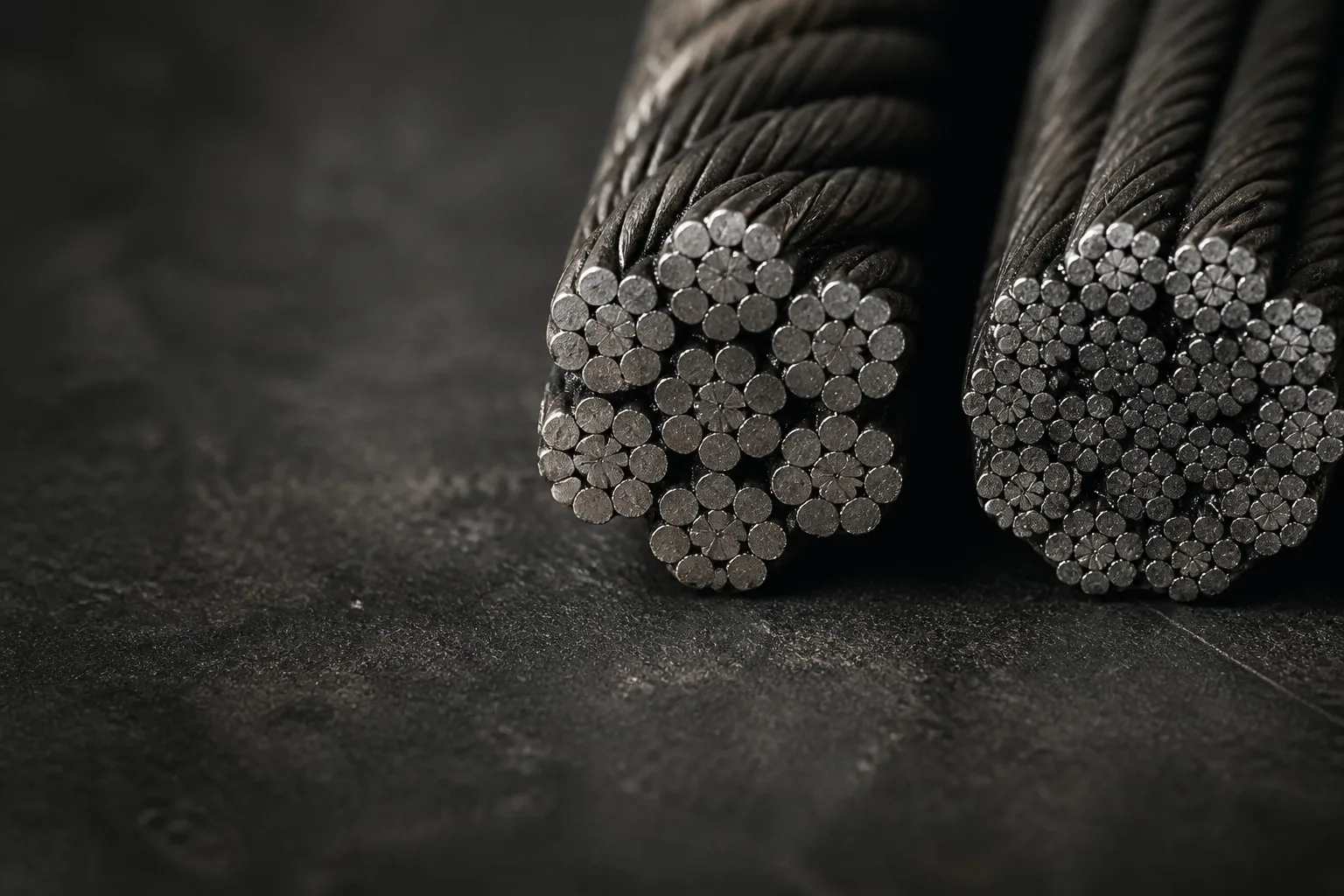
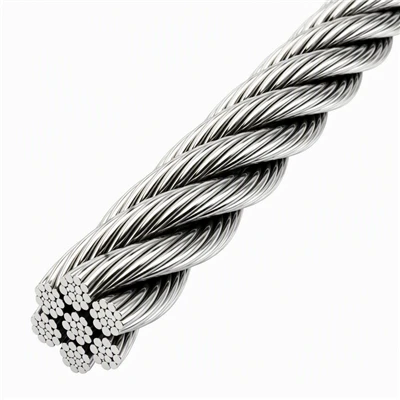
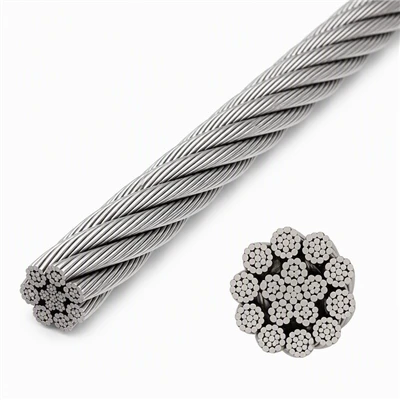
Fig. 1: Representative construction comparison of 6×19 and 6×36 wire rope.
| Characteristic | 6×19 Class | 6×36 Class |
|---|---|---|
| Number of Wires | Fewer, generally larger wires | More, generally smaller wires |
| Flexibility | Good | Higher |
| Bending Fatigue | Good for moderate cycles | Generally better for repeated bending |
| External Abrasion | Generally better | Generally lower than 6×19 |
| Small Sheaves | Less suitable where severe bending occurs | Generally more suitable |
| Heavy Contact / Wear | Preferred in many applications | Application dependent |
| Typical Applications | General lifting, hoists, winches | High-cycle lifting, cranes, machinery |
1. 6×19 Class: The Abrasion-Resistant Choice
The 6×19 class contains six strands around a central core, with a relatively lower number of wires per strand than a 6×36 construction. The larger outer wires form a comparatively robust outer surface.
This construction can provide good resistance to external abrasion and mechanical wear, particularly in applications where the rope experiences contact with drums, sheaves or other surfaces but does not undergo extremely high bending cycles.
Typical advantages include:
- Good external wear resistance
- Relatively robust outer wires
- Good general-purpose performance
- Suitable for many lifting and hoisting applications
- Widely available in different diameters and core configurations
Where Is 6×19 Commonly Used?
- General-purpose cranes
- Winches
- Hoisting equipment
- Construction machinery
- Material handling equipment
- Guying and support applications where appropriate
- Applications with relatively moderate bending cycles
6×19 can be an effective choice when external wear is a more significant concern than extreme flexibility.
2. 6×36 Class: The Flexibility Specialist

Representative 6×36 wire rope bending test over a sheave.
The 6×36 class contains a greater number of smaller wires within each strand. The increased number of wires allows the rope to bend more readily around sheaves and drums.
This makes 6×36 constructions particularly useful where the rope is subjected to repeated bending cycles, frequent movement or relatively demanding sheave interaction.
Typical advantages include:
- Higher flexibility
- Improved bending fatigue performance in suitable applications
- Better adaptation to repeated sheave bending
- Suitable for many crane and hoisting applications
- Useful where sheave and drum bending is a dominant service factor
Where Is 6×36 Commonly Used?
- Crane hoisting systems
- High-cycle lifting equipment
- Winches with frequent rope movement
- Material handling machinery
- Applications involving repeated bending over sheaves
- Equipment where flexibility is a major design requirement
3. Why Does More Wires Mean More Flexibility?
Wire rope flexibility is strongly influenced by the diameter and arrangement of the individual wires. A strand containing more, smaller wires can generally accommodate bending more easily than a strand containing fewer, larger wires.
When the rope passes around a sheave, individual wires and strands must move relative to one another. A finer wire construction can distribute this deformation across a larger number of wires.
This is one reason why 6×36 constructions are generally preferred for applications involving repeated bending.
4. Why Does 6×19 Usually Resist Abrasion Better?
External abrasion primarily affects the outer wires of a wire rope. The relatively larger outer wires commonly found in 6×19 constructions can provide a more substantial wear surface.
This can make 6×19 advantageous where the rope is subjected to:
- Repeated contact with equipment surfaces
- External mechanical abrasion
- Rough handling conditions
- Dragging or contact with surfaces where permitted
- Moderate bending combined with relatively high external wear
However, abrasion resistance is not determined by wire count alone. The exact strand design, wire diameter, surface condition, rope construction and operating environment must all be considered.
5. 6×19 vs 6×36: Bending Fatigue
If a wire rope repeatedly passes over sheaves, bending fatigue can become one of the dominant factors determining service life.
Every bending cycle causes movement and stress within the wires and strands. Repeated cycles can eventually result in fatigue cracks and broken wires.
In general, 6×36 constructions are better suited to applications where repeated bending is a major service requirement.
However, rope life is also strongly influenced by the sheave-to-rope diameter ratio, known as the D/d ratio.
Choosing a more flexible rope does not compensate for an undersized sheave. The rope and sheave should be designed as a complete system according to the applicable equipment requirements.
6. The Importance of Sheave Diameter
The diameter of the sheave has a major effect on wire rope bending stress. A smaller sheave forces the rope to bend through a tighter radius, increasing the deformation experienced by individual wires.
For this reason, buyers should provide the following information when selecting between 6×19 and 6×36:
- Wire rope diameter
- Sheave diameter
- Drum diameter
- Number of bending cycles
- Operating speed
- Maximum working load
- Number of sheaves in the reeving system
7. Core Type Also Matters
The term "6×19" or "6×36" describes the strand construction, but it does not completely define the rope. The core type can significantly influence rope behavior.
Common core options include:
- FC: Fiber Core
- IWRC: Independent Wire Rope Core
- IWS: Independent Wire Strand
For example, an 6×36 IWRC wire rope can provide different support and crushing characteristics compared with a 6×36 fiber-core rope. The correct core depends on the equipment, loading condition and required performance.
8. 6×19 FC vs 6×19 IWRC
| Feature | 6×19 FC | 6×19 IWRC |
|---|---|---|
| Core | Fiber | Independent wire rope core |
| Flexibility | Generally higher | Generally lower |
| Crushing Resistance | Moderate | Higher |
| Support to Outer Strands | Lower | Higher |
| Typical Use | General lifting and flexible applications | Heavy-duty lifting and higher loading |
The exact performance depends on the complete rope design and manufacturer's specification.
9. 6×19 vs 6×36 for Crane Applications
| Crane Requirement | Potentially Preferred Construction | Reason |
|---|---|---|
| High external abrasion | 6×19 | Relatively larger outer wires |
| Frequent bending | 6×36 | More flexible wire arrangement |
| Small sheaves | 6×36, if permitted by equipment design | Better flexibility |
| Heavy crushing on drum | Often IWRC construction | Better internal support |
| General-purpose hoisting | 6×19 or 6×36 | Depends on duty cycle |
| High cycle operation | 6×36 | Generally better bending fatigue performance |
10. 6×19 vs 6×36: Which One Should You Buy?
There is no universally "better" construction. The correct rope is determined by the dominant operating condition.
Choose 6×19 when:
- External abrasion is a major concern.
- The rope experiences relatively moderate bending cycles.
- A robust outer wire structure is desirable.
- The application requires a general-purpose lifting rope.
Choose 6×36 when:
- Repeated bending is a major concern.
- The rope runs frequently over sheaves.
- Flexibility is a priority.
- The equipment operates at a high duty cycle.
- The application requires improved bending fatigue performance.
11. 6×19 vs 6×36 Breaking Force
It is not technically correct to say that 6×19 always has a higher breaking force than 6×36, or vice versa. Breaking force depends on the complete rope specification.
When comparing two ropes, verify:
- Nominal rope diameter
- Rope construction
- Core type
- Wire tensile strength
- Rope grade
- Metallic cross-sectional area
- Manufacturing standard
- Minimum breaking force
For purchasing purposes, buyers should compare the actual minimum breaking force stated on the technical datasheet rather than assuming performance from the construction designation alone.
12. 6×19 vs 6×36 Wire Rope Applications
| Application | Typical Choice | Main Consideration |
|---|---|---|
| General crane lifting | 6×19 / 6×36 | Duty cycle and equipment design |
| Construction hoist | 6×36 | Repeated bending |
| Winch | 6×19 / 6×36 | Drum and bending conditions |
| Heavy abrasion environment | 6×19 | Outer wire wear |
| High-cycle crane | 6×36 | Fatigue and flexibility |
| Material handling | 6×19 / 6×36 | Load and operating frequency |
13. 6×19 vs 6×36: Common Buyer Mistakes
Mistake 1: Choosing only by price
The cheapest rope may not have the lowest total cost. A rope that is better suited to the actual bending and wear conditions may provide longer service life.
Mistake 2: Assuming more wires always means better rope
More wires generally improve flexibility, but they can also produce smaller individual wires that may be more susceptible to certain forms of external wear. Rope selection must match the application.
Mistake 3: Ignoring the sheave diameter
Even a flexible rope can suffer premature fatigue when operated over an unsuitable or undersized sheave.
Mistake 4: Comparing construction without comparing core
6×36 FC and 6×36 IWRC are not identical products. Core type can significantly influence crushing resistance, support and rope behavior.
Mistake 5: Selecting by diameter only
The same nominal diameter can have different breaking forces and service characteristics depending on rope construction, tensile strength and core.
14. Frequently Asked Questions
What is the difference between 6×19 and 6×36 wire rope?
6×19 generally contains fewer and larger wires per strand, providing good external abrasion resistance. 6×36 contains more and smaller wires, generally providing greater flexibility and better suitability for repeated bending.
Is 6×36 stronger than 6×19?
Not necessarily. Breaking force depends on the complete rope specification, including diameter, construction, core, wire tensile strength and manufacturing standard. The actual minimum breaking force should be compared using the manufacturer's datasheet.
Which is more flexible, 6×19 or 6×36?
In general, 6×36 is more flexible because it uses a greater number of smaller wires within each strand. This makes it better suited to applications involving repeated bending over sheaves.
Which wire rope is better for abrasion?
6×19 constructions are generally preferred where external abrasion is a major concern because their relatively larger outer wires can provide better resistance to surface wear.
Which wire rope is better for cranes?
Both can be used for cranes. 6×19 may be suitable for general lifting and applications with higher external wear, while 6×36 is often preferred for applications involving frequent bending and high operating cycles. The final choice should follow the crane manufacturer's rope specification.
Is 6×36 better for small sheaves?
6×36 is generally more flexible and may be better suited to applications involving smaller sheaves, but the sheave-to-rope diameter ratio must still comply with the equipment and applicable design requirements.
What is 6×36 IWRC wire rope?
6×36 IWRC is a six-strand wire rope with a 36-wire-class strand arrangement and an independent wire rope core. The IWRC provides additional internal support and can improve resistance to crushing compared with a fiber-core design.
Can 6×19 replace 6×36?
Not automatically. A replacement rope should match the original equipment specification, including construction, diameter, core, breaking force, lay and applicable standard. Substituting one construction for another should be approved by the equipment designer or responsible engineer where required.
15. How to Specify 6×19 or 6×36 Wire Rope
For an accurate quotation, provide the following information:
| Parameter | Example |
|---|---|
| Construction | 6×19 / 6×36 |
| Core | FC / IWRC |
| Diameter | 16 mm / 20 mm / 24 mm / 32 mm |
| Surface | Galvanized / Bright |
| Tensile Strength | 1770 MPa / 1960 MPa |
| Lay | RHOL / LHOL / RLL |
| Length | 500 m / 1,000 m |
| Application | Crane / Hoist / Winch |
| Sheave Diameter | Equipment specification |
| Required Breaking Force | Specified minimum value |
16. SOLITE Technical Recommendation
If you are unsure whether 6×19 or 6×36 wire rope is appropriate, do not select the construction based only on rope diameter or price. Provide the application and operating conditions so the rope can be matched to the actual equipment.
SOLITE can supply 6×19 and 6×36 steel wire rope in different diameters, core configurations, tensile grades and surface treatments for cranes, hoists, winches, construction equipment and general industrial applications.
Send us your rope diameter, construction, application, sheave/drum diameter and working load.
Ask Wire Rope Engineers