Rigging and lifting are critical components of modern engineering operations. The formulation and implementation of construction standards are directly related to operational safety, efficiency, and project quality. This article systematically explains the standard system for rigging and lifting construction from four perspectives: technical specifications, operating procedures, safety requirements, and management supervision. This article aims to provide professional guidance for industry practice.
I. Technical Specifications and Standards
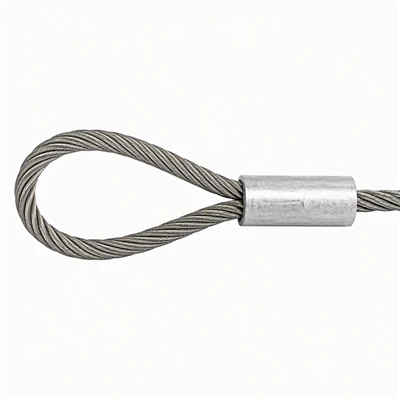
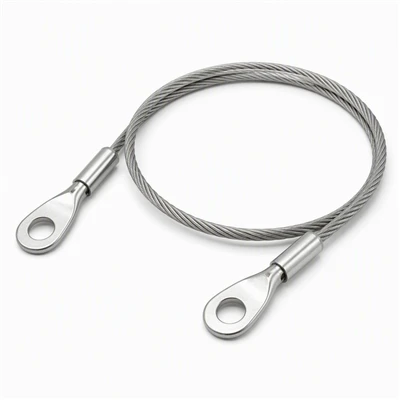
The technical specifications for rigging and lifting are the core foundation of construction standards. According to the requirements of the International Crane Manufacturers Association (IMCA) and my country's "Safety Regulations for Lifting Machinery" (GB 6067.1-2010), rigging selection must strictly match the weight, shape, and operating environment of the load being hoisted. The breaking strength of wire rope slings must be no less than six times the load weight, and the safety factor of synthetic fiber slings must be no less than seven. Connecting components such as hooks and shackles must have clearly marked load ratings and undergo regular non-destructive testing.
Regarding rigging configuration, the angle of multi-leg slings should be controlled within 90°, with a maximum of no more than 120°. For irregular loads, the center of gravity must be calculated and auxiliary balancing devices must be installed. Under special operating conditions (such as high temperatures and corrosive environments), specialized rigging materials that comply with ASTM A975 or DNVGL-OS-E303 standards must be used. All rigging components must be accompanied by original manufacturer quality certification documents and marked with unique numbers for traceability.
II. Standardized Operating Procedures
Standardized operating procedures are key control points for ensuring construction safety. Before operation, a "three checks and three inspections" procedure must be performed: inspect the rigging for visual wear (cross-section wear exceeding 10% of the original diameter is considered scrapped), verify the lifting plan calculations, and confirm the foundation bearing capacity (generally required to be ≥150 kPa). Lifting commanders must hold a special equipment operator certificate (Class Q1/Q2) and use standard hand signals or the audible and visual signaling system specified in ISO 7731.
The lifting process should follow the principle of "slow start, steady lift, and steady positioning." The load should be kept within a height of 0.3-0.5 meters above the ground for stability observation. When multiple cranes are used in a coordinated operation, a synchronized control system must be installed, ensuring that the load distribution deviation between cranes does not exceed 8% of the rated capacity. Once the load is in place, at least two effective restraining devices must remain in place before unhooking. Continuous monitoring should be maintained throughout the operation, and operations should be immediately suspended if wind speeds exceed level 6 (10.8 m/s).
III. Safety Management System
Safety standards are paramount in rigging and lifting operations. According to OSHA 1926.1400 and my country's "Technical Specifications for Safety of Height Operations in Construction" (JGJ 80-2016), the work area must be protected by a double perimeter (hard fencing + warning tape), and no unauthorized personnel are allowed to remain within the danger radius. Personal protective equipment (PPE) must include a fall arrester, a hard hat (impact absorption capacity ≥ 200J), and cut-resistant gloves (EN388 level 4 or higher).
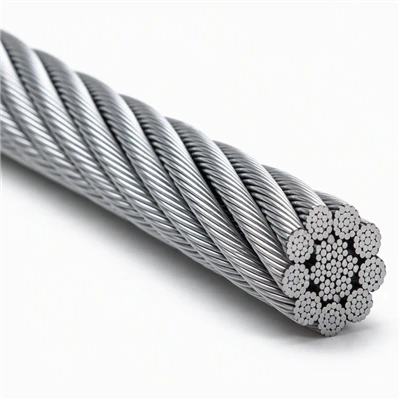
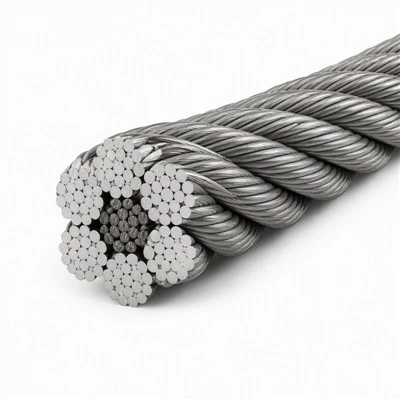
Equipment maintenance implements a three-tiered inspection system: daily, weekly, and monthly. Inspections focus on checking broken wires (cross-lay wire ropes must be scrapped if the number of broken wires within a lay length reaches 10% of the total number of wires), deformation of connectors (shackles with an ovality exceeding 10% are prohibited), and brake system reliability (brake torque reduction exceeding 20% requires inspection). Emergency plans must include buffer zones for load loss (buffer material compressive strength ≥ 20 MPa) and first aid procedures for casualties (golden rescue time is limited to 5 minutes).
IV. Quality Control and Supervision
An effective supervision mechanism ensures the implementation of standards. Construction companies should establish an ISO 9001 quality management system and maintain complete rigging lifecycle records (including procurement and acceptance records, periodic inspection reports, and maintenance history). Third-party inspection agencies must conduct magnetic particle inspection or ultrasonic testing on in-use rigging every six months in accordance with GB/T 20118-2017, with a minimum 100% inspection coverage.
Supervision units should focus on reviewing the load calculations in the construction plan (signed and confirmed by a registered structural engineer), special safety technical briefing records (completely signed by all participants), and daily work logs. For major lifting projects exceeding 100 tons, expert review meetings must be held to discuss foundation treatment solutions, the rationality of rigging selection, and the completeness of emergency measures. Government regulatory agencies should utilize IoT technology to manage rigging equipment with RFID tags for real-time monitoring of equipment status.
Strict implementation of rigging and lifting construction standards is a crucial cornerstone of construction safety. By refining technical specifications, streamlining operational procedures, systematically implementing safety management, and intelligently overseeing quality control, operational risks can be significantly reduced and construction reliability improved. All industry players should continuously monitor updates to international standards (such as ISO 4309:2017, "Guidelines for Crane Wire Rope Care and Maintenance") and incorporate digital technologies (such as BIM lifting simulation and intelligent sensor monitoring) to promote the development of inherently safe rigging and lifting operations. Only by translating standard requirements into conscious action by all employees can the ultimate goal of "zero accidents" be achieved.