Difference Between Rotating and Non-rotating Wire Rope
Difference Between Rotating
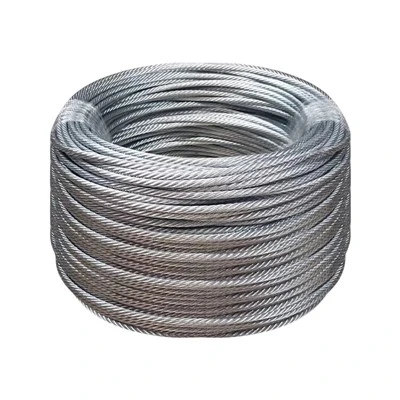
Rotating wire ropes are single-layer stranded structures with unidirectional lay, exhibiting self-rotation under load due to internal torsional forces. They offer key advantages including simple construction, low cost, excellent flexibility, ease of bending, and mature manufacturing processes.
Non-rotating Wire Rope
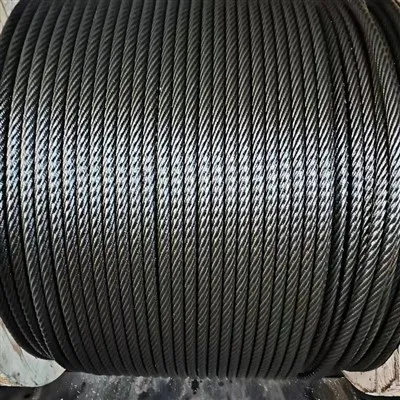
Non-rotating steel wire ropes achieve a 'zero-torque' or 'low-torque' state through counter-rotational twisting, whereby the torque of the inner and outer layers counterbalances each other, thereby preventing rotation.
Non-rotating wire ropes overcome the rotational issues inherent in conventional wire ropes through innovative structural design. They serve as critical components for enhancing safety and efficiency in modern lifting and transport applications, proving particularly suitable for operational environments requiring precise control over the orientation of suspended loads.
Core distinction
Below is a detailed comparison of these across multiple dimensions:
| products |
 |
 |
| Difference Between Rotating | Non-rotating Wire Rope | |
| Structural Characteristics | Typically composed of an outer layer of strands encasing a core (which may be either fibre or steel). | Often featuring a multi-ply stranded construction, lacking conventional independent cores, formed by twisting multiple layers of strands together. |
| Anti-rotation performance | Poor. When used singly, particularly in unguided, high-lift applications, both the load and the wire rope itself are prone to rotation and twisting. | Excellent. Effectively suppresses rotation of both the wire rope and suspended load, ensuring smooth operation and high safety. |
| Operational Stability | Poor, prone to tangling, knotting, and loss of load control. | Exceptionally high, with smooth lifting and precise positioning. |
| Bending fatigue life | Relatively high. Under identical conditions, it typically exhibits a longer bending fatigue life. | Relatively low. Due to its complex structure, contact stresses between wires are greater, and bending fatigue performance is generally inferior to that of conventional steel wire ropes. |
| Breaking strength | Lower for the same diameter | Higher for the same diameter (more compact structure) |
| Price and Cost | Low, offering excellent value for money | High, featuring complex structures and demanding manufacturing processes |
| Maintenance Difficulty | Simple; wear/broken strands can be directly assessed | Requires protection of outer strands; damage to outer layer will compromise anti-rotation performance |
| Standard Specifications | 6×19, 6×37, 8×19, 6×29 | 8×7, 19×7, 34×7, 35W×7, 4V×39S |
| Application Scenarios | Guided applications: such as travelling (bridge cranes), luffing ropes, stay cables, or where left- and right-hand ropes are used in pairs to counteract torque. | Unguided high-lift hoisting: such as hoisting ropes for tower cranes, crawler cranes, truck cranes, harbour cranes, and mining winches. |