Why Does My Wire Rope Twist? A Simple Guide to Preventing Kinks During Installation
SOLITE TECHNICAL RESOURCE | 2026 EDITION
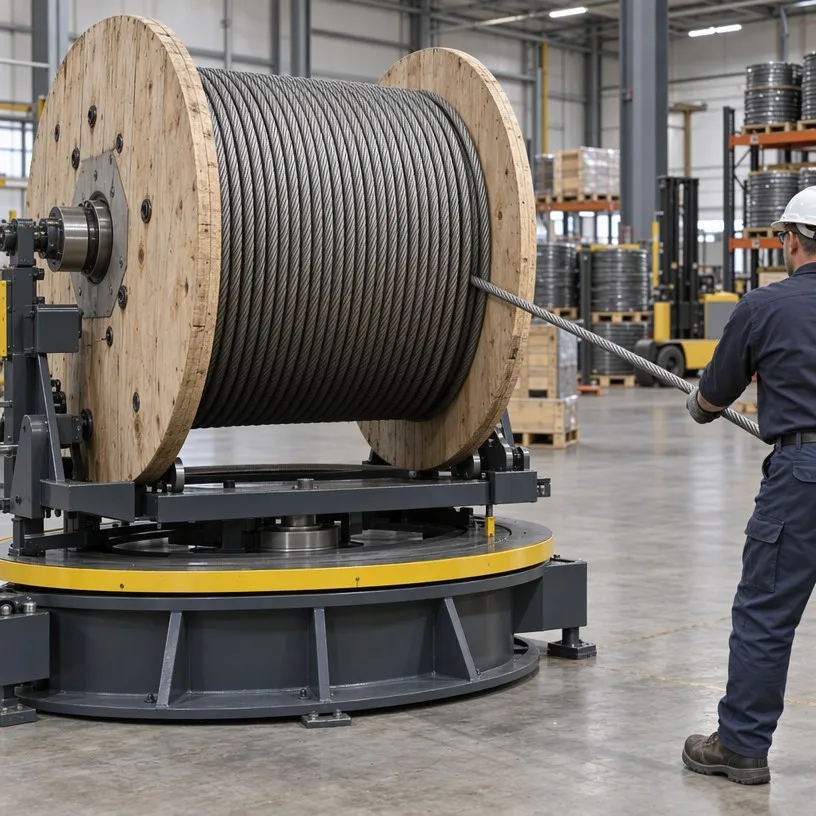
Practical Visual Guide: Real-world engineering context for 3. Installation Safety (安装实务)
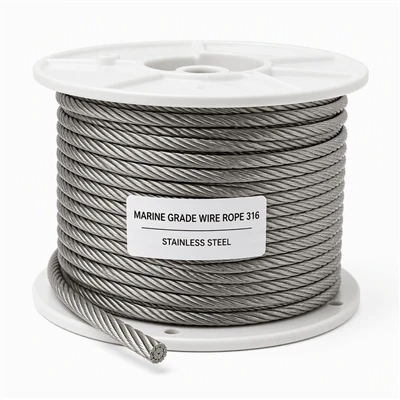
There is nothing more frustrating than seeing a brand-new reel of wire rope twist into a tangled mess during installation. This "twisting" or "kinking" isn't a defect in the steel; it is a problem of "Induced Torque" caused by improper handling. If you pull a rope off the side of a stationary reel, you are essentially "winding up" the steel like a spring.
The "Telephone Cord" Effect:
Imagine an old-fashioned coiled telephone cord. If you pull it straight without letting it spin, it will eventually loop back on itself. This is exactly what happens to wire rope. A permanent kink caused during installation cannot be repaired-it is a structural weak point that requires the rope to be discarded.
The Best Way to Unreel:
To prevent kinks, the reel MUST rotate. We recommend using a "Reel Stand" or a "Turntable." The rope should be pulled off the reel in a straight line, following its natural lay.
Directional Alignment:
Always wind the rope from the top of the supply reel to the top of your machine's drum (or bottom-to-bottom). Never "cross-wind" (top-to-bottom), as this adds reverse-torque that will cause the strands to loosen and "birdcage."
At SOLITE, we provide clear "Installation Tags" on every reel. If your project involves a long vertical lift, such as in an elevator shaft, consider using our Non-Rotating Wire Rope series, which is engineered to be torque-neutral and far easier to install without twisting.