Wire rope is a flexible composite cable made from multiple high-strength steel wires twisted together. It is widely used in lifting machinery, construction, mining, marine engineering, and transportation. Its excellent tensile strength, flexibility, and wear resistance make it an indispensable load-bearing component in modern industry.
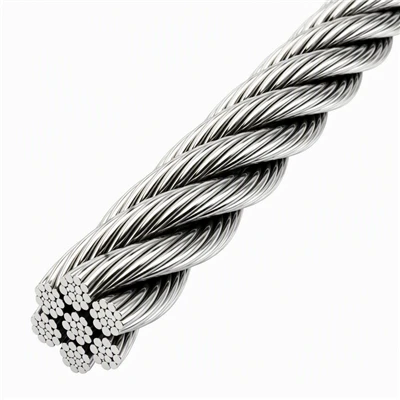
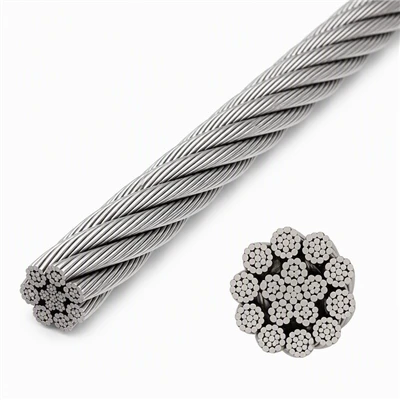
Structurally, a wire rope typically consists of a core surrounded by multiple layers of steel wires. The core is typically a fiber core (such as hemp) or a metal core, providing stability and lubrication support. The outer layer of steel wires can be single-strand or multi-strand, depending on the application. Common structures include 6×19, 6×37, and 6×61, where the numbers represent the number of strands and the number of steel wires per strand, respectively. This layered twisting process enables the wire rope to withstand significant tensile forces while maintaining excellent bending fatigue resistance.
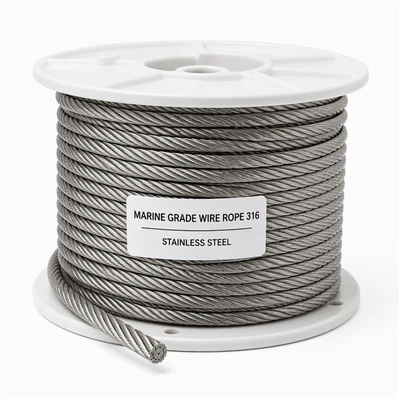
The performance of a wire rope depends on its material and manufacturing process. High-quality carbon steel or alloy steel is the primary raw material, and the strength and toughness of the steel wires are enhanced through processes such as cold drawing and heat treatment. Surface galvanizing enhances corrosion resistance and makes it suitable for use in humid or corrosive environments. Depending on the application, wire ropes can be categorized as smooth, galvanized, or stainless steel. Galvanized wire ropes are particularly common in outdoor and marine applications due to their combined strength and corrosion resistance.
In practical applications, wire ropes require regular inspection and maintenance to ensure safety. Common forms of damage include wire breakage, wear, rust, and deformation, requiring specialized testing to assess their remaining load-bearing capacity. Proper selection and proper operation can significantly extend their service life, including avoiding overloading, reducing friction at sharp corners, and regular lubrication.
As the core component connecting power and load, technological advancements in wire ropes continue to drive improvements in industrial efficiency. Future advancements in materials science and manufacturing processes will further expand the potential of wire ropes with higher strength and durability in extreme environments.