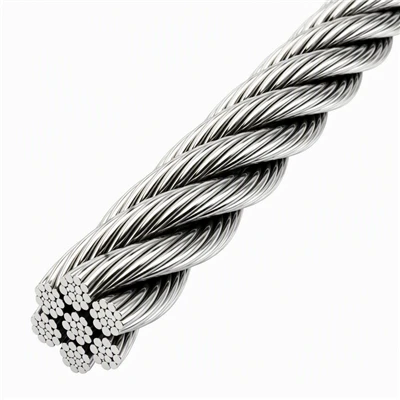
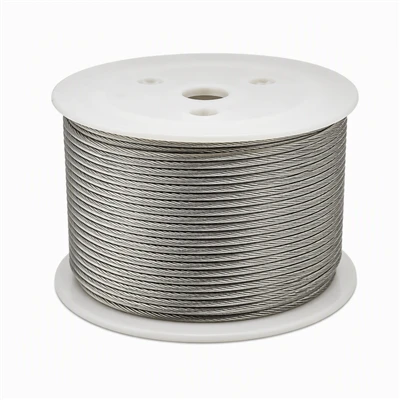
Wire rope, as an important flexible load-bearing component, is widely used in lifting machinery, construction, mining, transportation, and other fields. Wire rope can be divided into various types based on its structure, application, and material, each with unique performance and application scenarios.
Classification by Structure
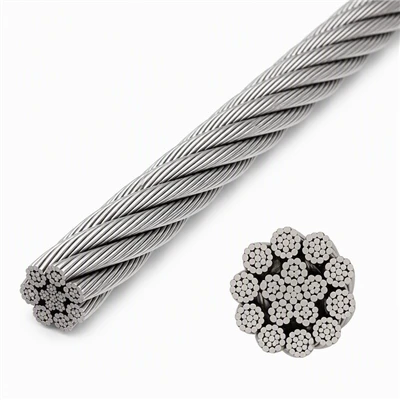
The structure of a wire rope primarily refers to the arrangement of its strands and filaments. Common classifications include:
1. Point Contact Wire Rope: Made from twisted wires of varying diameters, each layer of wires makes point contact. This simple structure offers poor wear resistance and is suitable for light loads.
2. Line Contact Wire Rope: The wires are of uniform diameter, with each layer closely arranged along the strand helix. This provides a large contact area and high load capacity, making it widely used in cranes and elevators.
3. Surface Contact Wire Rope: A special process is used to compact the wires, creating surface contact. This provides excellent compression and wear resistance and is commonly used in mine hoisting and ropeway transportation.
Classification by Application
Depending on the application scenario, wire ropes can be classified as follows:
1. Lifting wire ropes: Require high strength and fatigue resistance, typically using line or surface contact structures, such as 6×19S and 6×37S.
2. Elevator wire ropes: Emphasize flexibility and safety, typically using 8×19S or 8×19W structures to ensure smooth operation.
3. Fishing and marine wire ropes: Require corrosion resistance and flexibility, often made of galvanized steel wire for humid environments.
4. Bridge and construction wire ropes: Require high load-bearing capacity and wind vibration resistance, often using thicker diameter, higher strength wire ropes.
Classification by Material
The material of a wire rope directly affects its performance, mainly including:
1. Carbon steel wire rope: Made from carbon steel, it has high strength but slightly lower toughness, suitable for general industrial use.
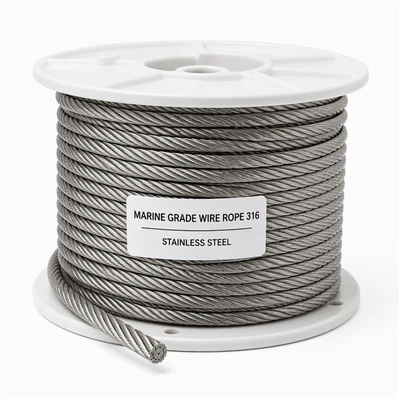
2. Stainless steel wire rope: Highly corrosion-resistant, suitable for specialized environments such as the chemical, food, and marine engineering sectors.
3. Galvanized Steel Wire Rope: This galvanized wire rope offers enhanced corrosion resistance and is widely used outdoors and in humid environments.
Steel wire ropes come in a variety of types, and selection should be carefully considered based on load, environment, and usage requirements to ensure safety and cost-effectiveness.