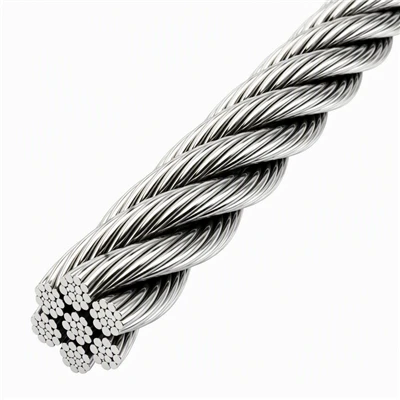
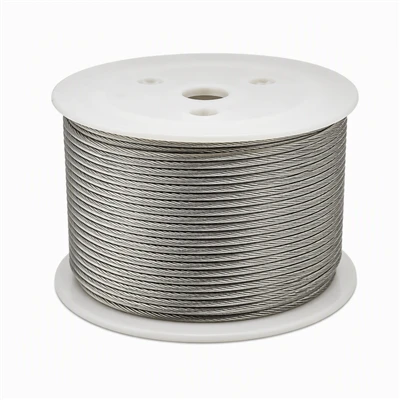
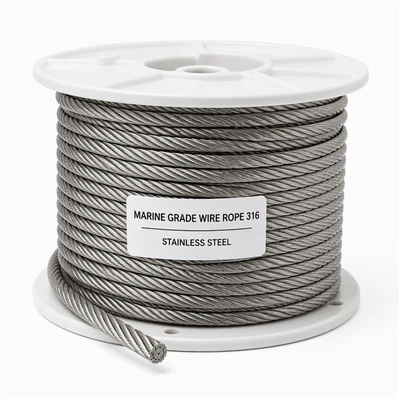
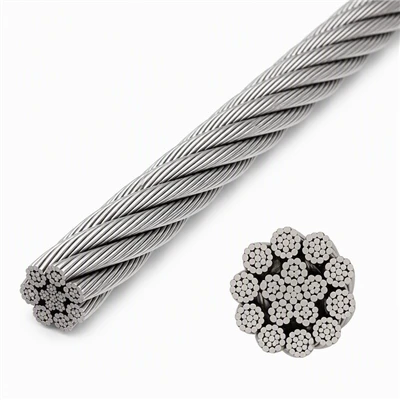
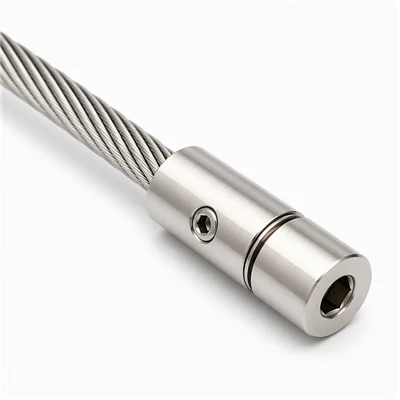
Stainless steel wire ropes are widely used in industries such as lifting, shipping, chemical processing, and precision machinery due to their corrosion resistance, high tensile strength, and durability. However, various factors associated with actual use can gradually degrade their overall performance, reduce their load-bearing capacity, and shorten their service life.

Improper Installation and Mechanical Wear
Unstandard installation is a primary cause of early performance degradation. Excessive bending, sharp-angle winding and mismatched pulley groove size will produce continuous friction and extrusion on the wire rope surface. Long-term mechanical wear leads to thinning of single steel wires, surface scratch damage and strand deformation. In frequent lifting and reciprocating motion, fatigue wear accumulates rapidly, resulting in reduced tensile strength and easy wire breakage.
Corrosion and Harsh Environmental Conditions
Although stainless steel materials have anti-corrosion properties, they are not completely corrosion-proof. In high-salinity marine environments, humid and dusty working sites, or chemical environments with acid and alkali vapor erosion, the rope surface and tiny gaps between strands are prone to pitting corrosion and crevice corrosion. Corrosion will erode the wire structure, increase surface roughness, and greatly reduce the flexibility and load-bearing stability of the wire rope. Long-term corrosion also causes strand rust bonding, leading to unbalanced stress during operation.
Overload and Abnormal Stress
Long-term overload operation far exceeding the rated load is fatal to stainless steel wire ropes. Sustained overstress will produce irreversible plastic deformation of steel wires, resulting in rope diameter shrinkage, strand loosening and structural distortion. In addition, sudden impact load, torsion and uneven tension during use will cause local stress concentration, leading to internal metal fatigue and hidden crack defects. These invisible damages will continuously weaken the overall mechanical performance.
Lack of Daily Maintenance and Aging
Long-term lack of cleaning, lubrication and regular inspection accelerates performance attenuation. Dust, sediment and impurities accumulated in the strand gaps will aggravate internal friction and wear. Without regular professional lubrication, the friction coefficient between steel wires increases, and fatigue damage intensifies. Moreover, natural aging occurs after long-term service; the metal toughness of stainless steel decreases gradually, and the wear resistance and fatigue resistance decline significantly, even if the rope has no obvious damage.
Material and Production Defects
Unqualified raw materials and defective production processes also lead to poor inherent performance of wire ropes. Impure stainless steel materials, uneven wire hardness and unqualified stranding process will cause inconsistent stress of each strand. Structural defects such as loose stranding, wrong lay length and uneven wire diameter will make the wire rope bear force unevenly in use, resulting in local premature damage and overall performance weakness.
The performance weakening of stainless steel wire ropes is mainly caused by mechanical damage, environmental corrosion, improper use, insufficient maintenance and inherent product defects. Standardized installation, reasonable load control, regular maintenance and adaptation to service environments are the key measures to maintain stable performance and extend the service life of wire ropes.