Wire Rope Discard Criteria: Understanding ISO 4309 Standards
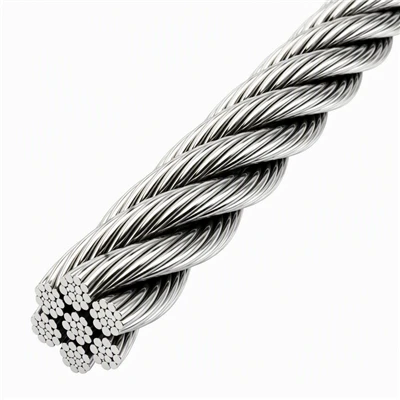
Steel wire rope is a critical load-bearing component in cranes, hoists, elevators, lifting equipment, construction machinery and industrial handling systems. During service, wire rope gradually deteriorates due to repeated bending, abrasion, corrosion, fatigue, crushing and deformation. Knowing when to replace a wire rope is essential for preventing equipment failure and maintaining safe lifting operations.
ISO 4309 provides internationally recognized guidance for the care, maintenance, inspection and discard of steel wire ropes used on cranes and hoists. The standard evaluates several deterioration mechanisms rather than relying on a single measurement. A competent person should consider the rope construction, application, working conditions and the combined effect of different defects when determining whether a rope should be discarded.
What Is ISO 4309?
ISO 4309:2017, titled Cranes - Wire ropes - Care and maintenance, inspection and discard, establishes principles for inspecting and maintaining steel wire ropes used on cranes, hoists and related lifting equipment.
The standard covers common deterioration mechanisms including:
- Visible and internal wire breaks
- Reduction in rope diameter
- External and internal wear
- Corrosion
- Rope deformation
- Strand distortion or protrusion
- Core damage and local diameter reduction
- Kinks and flattened sections
- Heat or electrical damage
- Combined effects of multiple deterioration mechanisms
ISO 4309:2017 also recognizes that deterioration can be more severe in specific areas, including crossover zones on multi-layer drums. Therefore, inspection should not be limited to a random visual check of the rope surface.
Key Wire Rope Inspection Dimensions
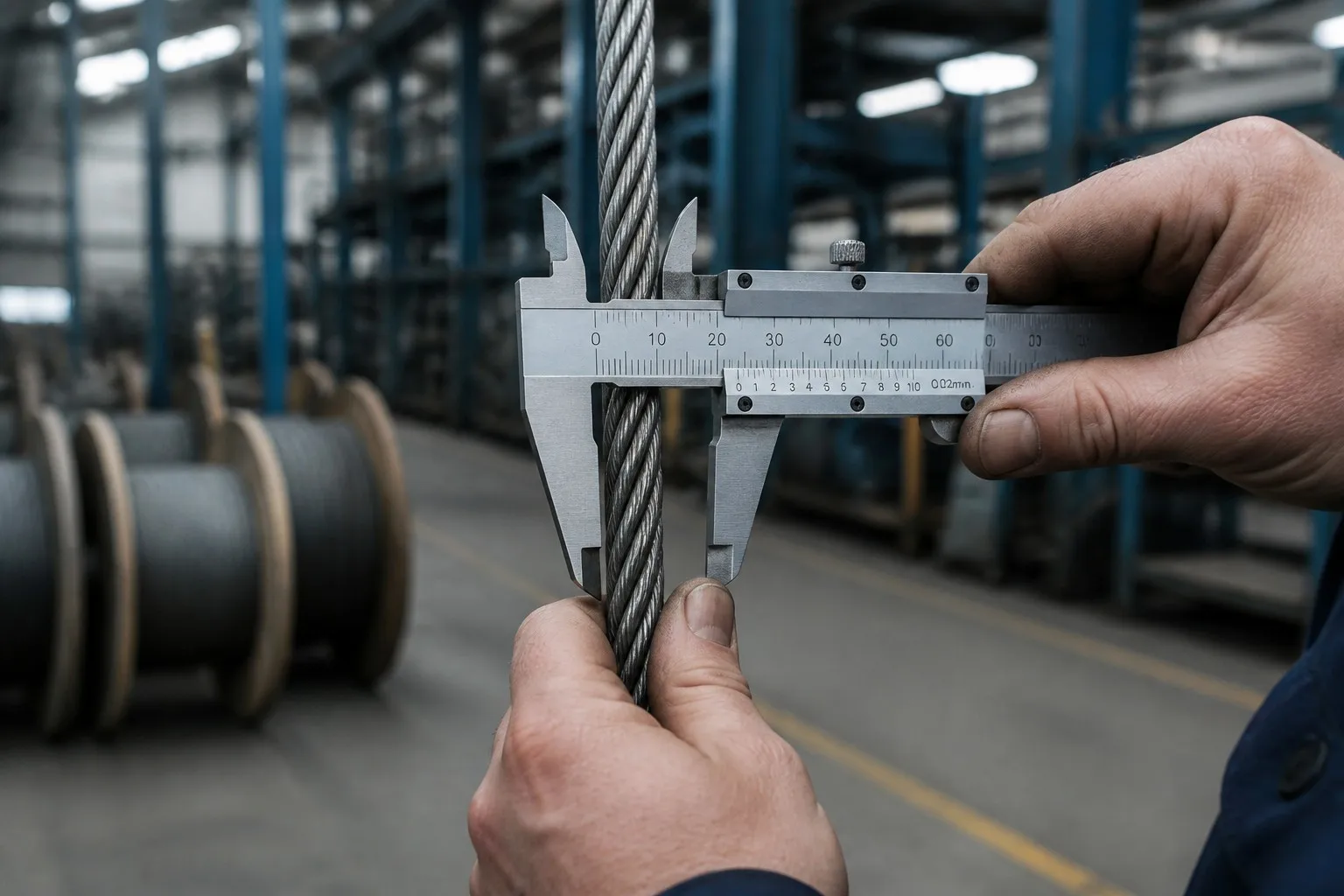
Step 1: Measure the wire rope diameter using a calibrated measuring instrument.
A proper wire rope inspection should evaluate more than one parameter. The following five areas are particularly important when assessing rope condition.
1. Wire Rope Diameter Reduction
Measuring the rope diameter is one of the most important routine inspection methods. A reduction in diameter can indicate external wear, internal wear, corrosion, broken wires, core deterioration or other structural damage.
The measured diameter should be compared with the rope's nominal diameter and, where appropriate, previous inspection records. ISO 4309:2017 does not use a universal "90% of nominal diameter" rule for every rope type. The applicable discard criterion depends on the rope construction and the deterioration condition.
| Rope Condition | Inspection Focus | Recommended Action |
|---|---|---|
| Minor diameter change | Monitor trend and record measurements | Continue scheduled inspection |
| Progressive diameter reduction | Investigate wear, corrosion or core deterioration | Increase inspection frequency |
| Diameter reduction approaching applicable discard criterion | Compare with rope construction and ISO 4309 criteria | Prepare for replacement |
| Local severe diameter reduction | Check for damaged or displaced core/strand | Discard may be required |
How to Measure Wire Rope Diameter Correctly
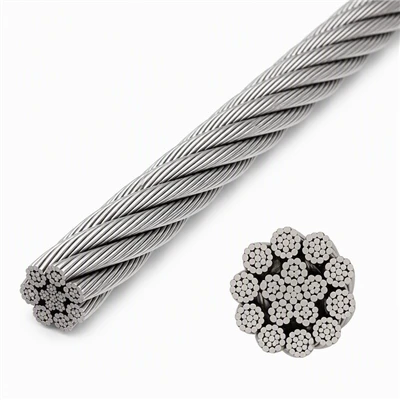
For a stranded wire rope, the correct diameter should be measured across the rope using a suitable caliper or rope diameter gauge. Measurements should not be taken across individual wires or between strand valleys.
- Clean excessive dirt, grease and loose corrosion from the inspection area.
- Select a representative section of rope.
- Place the measuring instrument across the widest points of the rope.
- Take measurements at multiple positions around the rope.
- Repeat measurements at several locations along the rope.
- Record the measured diameter and compare it with the nominal diameter and previous inspection data.
For critical lifting applications, trend monitoring is particularly useful because a rapidly changing diameter can indicate accelerated deterioration even before the final discard threshold is reached.
2. Visible Broken Wires
Broken wires are one of the most recognizable signs of wire rope deterioration. However, the number of acceptable broken wires is not a universal fixed number. ISO 4309:2017 provides different criteria according to rope construction, rope category, lay type and operating condition.
For applicable rope constructions, broken wires are evaluated over reference lengths such as:
- 6d - six times the nominal rope diameter
- 30d - thirty times the nominal rope diameter
For example, if a rope has a nominal diameter of 20 mm:
- 6d = 120 mm
- 30d = 600 mm
The applicable broken-wire limit depends on the rope construction and inspection condition. Rotation-resistant ropes require particular attention because internal wire breaks may occur without being readily visible from the outside.
3. Wear and Abrasion
Repeated contact between the rope and sheaves, drums, rollers and other components can gradually reduce the diameter of individual outer wires.
Typical signs of external wear include:
- Flattened outer wires
- Reduced wire diameter
- Shiny or polished wear areas
- Loss of the original strand profile
- Visible wire breaks associated with worn areas
Uneven wear may indicate incorrect sheave alignment, unsuitable groove dimensions, excessive fleet angle, poor lubrication or abnormal operating conditions.
4. Corrosion
Corrosion can significantly reduce the metallic cross-sectional area of a wire rope and accelerate fatigue failure. Both external corrosion and internal corrosion should be considered during inspection.
Pay particular attention to ropes exposed to:
- Marine and offshore environments
- High humidity
- Saltwater or salt spray
- Chemical processing environments
- Outdoor construction sites
- Water, mud or contaminated working conditions
Surface discoloration alone does not necessarily mean that a rope has reached its discard condition. The inspector should assess the actual condition of the wires, including corrosion severity, pitting, loss of metallic area and associated wire breaks.
5. Rope Deformation
A wire rope can become unsafe even when the number of visible broken wires is relatively low. Structural deformation may indicate damage to the rope's internal geometry or core.
Common deformation types include:
- Kinking: Permanent sharp bending or distortion of the rope.
- Birdcaging: Outer strands open or separate from the rope core.
- Basket deformation: Strands become displaced or expanded.
- Flattening: The rope cross-section becomes significantly flattened.
- Core protrusion: The rope core or inner rope becomes visible or displaced.
- Strand protrusion: One or more strands move away from their original position.
- Local diameter change: A localized increase or decrease indicates possible internal structural damage.
A complete strand fracture is a serious condition. Under ISO 4309:2017, a rope with a complete strand fracture should be discarded immediately.
Wire Rope Discard Criteria at a Glance
| Inspection Item | What to Check | Potential Risk |
|---|---|---|
| Broken Wires | Number, distribution and location of visible breaks | Loss of load-bearing capacity and fatigue failure |
| Diameter Reduction | Change from nominal and previous measured diameter | Wear, corrosion or core deterioration |
| External Wear | Flattened or reduced outer wires | Reduced metallic area and fatigue resistance |
| Corrosion | Rust, pitting and internal/external corrosion | Reduced wire strength and accelerated fatigue |
| Deformation | Kinks, birdcaging, flattening and strand displacement | Structural instability and abnormal loading |
| Core Condition | Core protrusion, crushing or local diameter reduction | Loss of rope geometry and strength |
| Heat Damage | Discoloration, fused wires or thermal damage | Loss of mechanical properties |
How to Inspect a Wire Rope Step by Step
Step 2: Inspect the rope surface for broken wires, wear, corrosion and deformation.
- Identify the rope: Confirm rope diameter, construction, core type, lay direction and application.
- Locate critical sections: Inspect areas around drums, sheaves, end terminations and crossover zones.
- Clean the rope: Remove loose dirt and contamination so that defects can be identified.
- Measure diameter: Record the rope diameter at representative and high-risk locations.
- Count broken wires: Check the applicable 6d and 30d inspection lengths where required.
- Inspect wear: Look for flattened wires, abrasion and changes in strand geometry.
- Check corrosion: Examine both visible surface corrosion and indications of internal corrosion.
- Check deformation: Look for kinks, birdcaging, flattening, strand protrusion and core damage.
- Evaluate combined deterioration: Multiple defects at the same location can have a greater effect than any single defect considered independently.
- Record the inspection: Maintain inspection records to identify deterioration trends over time.
Where Should Wire Rope Be Inspected Most Carefully?
Wire rope deterioration is not always evenly distributed along its entire length. Certain locations experience higher bending, pressure, abrasion or mechanical interaction and therefore require additional attention.
- Drum crossover zones: Particularly important for multi-layer spooling.
- Sheave contact zones: Repeated bending can accelerate fatigue and wear.
- Drum entry and exit areas: These areas may experience repeated bending and fleet-angle effects.
- End terminations: Check for broken wires, corrosion, distortion and improper termination.
- Equalizer sheaves: Inspect areas subjected to repeated bending cycles.
- Areas exposed to contamination: Dirt, chemicals and moisture can accelerate deterioration.
Why Wire Rope Diameter Alone Is Not Enough
A common mistake during wire rope inspection is to judge rope condition using diameter alone. A rope may still appear close to its nominal diameter while suffering from localized broken wires, internal corrosion, deformation or other structural defects.
Conversely, a small reduction in diameter does not automatically mean that every rope has reached the same discard condition because the applicable criteria depend on the rope construction and deterioration mechanism.
For this reason, a professional wire rope inspection should combine:
- Diameter measurement
- Broken-wire inspection
- Wear assessment
- Corrosion assessment
- Deformation inspection
- Core and strand condition
- Service history and operating conditions
- Previous inspection records
When Should a Wire Rope Be Replaced?
A wire rope should be considered for replacement when an applicable discard criterion is reached or when a serious defect creates an unacceptable safety risk. Examples include:
- Broken wires exceed the applicable limit for the rope construction and service condition.
- Diameter reduction reaches the applicable discard criterion.
- A complete strand fracture is identified.
- Severe local diameter reduction indicates core or structural failure.
- Severe corrosion has significantly reduced the metallic section.
- Serious deformation such as kinking or birdcaging has occurred.
- Heat or electrical damage has affected the rope.
- Multiple deterioration mechanisms combine to create an unacceptable condition.
Wire Rope Inspection Checklist
| Inspection Point | Check | Record |
|---|---|---|
| Rope Identification | Diameter / construction / core / lay | Yes |
| Diameter | Measure at multiple locations | Yes |
| Broken Wires | Check 6d / 30d where applicable | Yes |
| Wear | External abrasion and wire flattening | Yes |
| Corrosion | External and internal indications | Yes |
| Deformation | Kinks / birdcaging / flattening | Yes |
| Core | Core protrusion or local reduction | Yes |
| Terminations | Socket / clip / wedge / other termination | Yes |
| Inspection History | Compare with previous measurements | Yes |
Common Questions About Wire Rope Discard Criteria
What is the ISO standard for wire rope discard criteria?
ISO 4309 is a key international standard covering the care, maintenance, inspection and discard of steel wire ropes used on cranes and hoists. The 2017 edition provides criteria for broken wires, diameter reduction, corrosion, deformation and other deterioration mechanisms.
When should a wire rope be discarded?
A wire rope should be discarded when an applicable ISO 4309 discard criterion is reached or when a serious defect such as complete strand fracture, severe deformation, critical corrosion or structural damage makes continued operation unsafe.
Is 90% of nominal diameter the ISO 4309 discard limit?
Not as a universal rule. ISO 4309:2017 uses different diameter-reduction criteria depending on rope construction and service condition. Therefore, a simple "90% diameter" rule should not be applied to every steel wire rope.
What does 6d and 30d mean in wire rope inspection?
In wire rope inspection, d represents the nominal rope diameter. Therefore, 6d means six times the nominal diameter and 30d means thirty times the nominal diameter. These reference lengths are used when evaluating visible broken wires under applicable ISO 4309 criteria.
Can a wire rope be unsafe without visible broken wires?
Yes. Internal corrosion, internal wire breaks, core damage, severe deformation and other structural defects may reduce rope performance without producing obvious external broken wires. Rotation-resistant ropes require particular attention because internal deterioration can be difficult to identify through visual inspection alone.
How often should a wire rope be inspected?
Inspection frequency depends on equipment type, operating duty, load cycles, environment, rope construction and applicable regulations. Critical lifting equipment and ropes operating in severe environments may require more frequent inspection. Always follow the equipment manufacturer's instructions and applicable inspection requirements.
What information is needed to assess wire rope condition?
A proper assessment should include rope diameter, construction, core type, lay, application, operating conditions, inspection history, broken-wire condition, wear, corrosion, deformation and other visible or detectable defects.
Wire Rope Selection and Replacement Support
Selecting the correct replacement wire rope is just as important as identifying when the existing rope should be discarded. The replacement rope should match the equipment requirements, rope construction, diameter, strength level, core type, lay and applicable standards.
At SOLITE, we supply galvanized steel wire rope, stainless steel wire rope, PVC/TPU coated wire rope and customized wire rope solutions for lifting, construction, industrial equipment, elevators, fitness equipment, agriculture and other applications.
Compare your rope diameter, construction, application and inspection findings with our technical team.
Contact Wire Rope Experts